This weekend I was out for a
beer with some friends, half of whom were Jewish, and somehow our meandering
conversation struck on the topic of keeping kosher. Not just the avoidance of
pork and other such options, but the cleaning of dishes and the care of the
kitchen, and about how some friends had gotten married and set up a kosher
household, though they had been living in non-kosher households through college
and early adulthood. As I listened, I was struck with a case of what
theologians call “holy envy” — that feeling one gets when someone else’s
religion offers something lacking. In some cases, of course, holy envy is the
precipitating factor that leads people to convert, to change religions. But in
more situations, holy envy can be that inner spur that makes you dig deeper
into your own religion, to look for resources that can strengthen your own
practice. Barbara Brown Taylor writes beautifully about it here: https://www.christiancentury.org/article/critical-essay/my-holy-envy-other-faith-traditions
Well as I sat there talking and
drinking I realized I had a case of holy envy. I asked myself how I felt about
the fact that my religion didn’t affect my eating and drinking. And for a hot
second I wanted to convert to Judaism, but I talked myself down, using the
mountain metaphor I love. The mountain metaphor initially claims that all
religions are just different paths up the same mountain, but to this we answer
that the religions are actually paths up different peaks in the same mountain
range. The view is similar but each one unique; and if you try to climb them
all at once you will end up just hiking around the foothills and never getting
to the stunning views of the heights. So instead of starting me on a new path,
holy envy pushes me to find out what my religion does teach me about eating and drinking. And when I look into that,
I don’t find much about what we should eat and drink – and much more about how we should eat and drink.
Jesus was known for eating and
drinking with the wrong people – with sinners. He was known for eating and
drinking with hungry people — particularly, sharing food with them. And a
generation later, Paul condemned the church in Corinth, not for eating and
drinking the wrong things, but for eating and drinking unequally. (1 Cor
11:17+) When you get together for a meal, he wrote, one of you remains hungry
while another drinks to excess. Our best research into the situation on Paul’s
hands suggests that the Corinthian meals were a kind of potluck – or, more
exactly, a potluck only shared in small table groups, not shared equally for
all. Paul wrote to persuade them that they needed to share fairly around the
community, even if some were rich and some were poor – when they gathered as a
church, they ought to have those distinctions erased.
I’m a vegetarian and have been
for a long time, with a mix of motives, from health to climate care to respect
for the lives of animals. You may not know that there is a short passage in
Paul’s letter to Corinth about vegetarianism as well (1 Cor 8:1+) The issue at
stake is that most meat, in Roman-occupied cities, was available at the pagan
temples where it had been slaughtered in sacrifice to the gods. Paul himself
believed it was fine to eat meat sacrificed to idols — because idols don’t
really exist, he wrote — but at the same time he said, “if my eating meat
causes scandal or a crisis of belief for a brother or sister who believes
eating such meat is unchristian, then I’ll happily eat vegetables for the rest
of my life, rather than cause them to stumble in the faith.”
I’ve never found myself in a
situation just like this, but I think of this principle when I choose locally
grown food for the sake of the farmer who is my neighbor. I also think of this
when I practice “flexitarianism.” For example, one Christmas in Uganda, my host
family gave me a huge plate of chicken and I, thoroughly lacking the language
or the cultural skills to turn it down gracefully, did my best to eat it. I had
a stomachache later, but the love and fellowship they offered was preserved —
and that, I think, is what really mattered.
So, if I ask myself what my
religion teaches about eating and drinking, I actually do hear a clear message:
honor all people, even if they believe differently from you; make choices that
do not cause others to suffer; share food with the hungry; and share table
fellowship with all. This may not help me answer those questions about washing
dishes or choosing a menu, but it helps me integrate my faith into my daily
life in practical ways, which is, I think, what the holy envy was about in the
first place.
Showing posts with label food. Show all posts
Showing posts with label food. Show all posts
Thursday, June 27, 2019

Monday, January 22, 2018
A Perfectionist goes to the Nutritionist
I'll try to write this in a way that will make sense to those of you who
aren't enneagram geeks, but Enneagrammers, have fun with it - I'm a One.
=)
A perfectionist goes to the Nutritionist
Today
I went to see a Registered Dietician, which is a covered benefit of my
health plan (thanks, Board of Pensions!), and she welcomed me and sat me
down and asked me why I was there.
Well, the entire drive
over I'd been thinking of how to answer that question - "why are you
here?" - so I was well armed. I don't know why I thought she would ask
it with sharp hostility, or why I needed to use the "well armed"
metaphor for my answer, but I'm always ready for a battle, so I had
great answers to all her questions. I wanted to see her so that I could
learn all kinds of ways to eat Better and optimize my health and be a
nutrition ninja and experiment with rigorous diets like going
gluten-free or dairy-free or sugar-free or anything else appropriately
extreme. Because I am good - in fact, I'm pretty terrific - at trying
harder and smarter and more intensely... so all she'd need to do would
be to give me big assignments, and then she could sit back and be
impressed as I delivered results in the form of Perfect Health. In two
months or less, I'm sure.
She didn't say yes to any of those ideas.
We
had a baffling experience, instead, where she asked me lots of detailed
questions about what I eat and in what amounts, and then she repeatedly
told me that I was doing a great job. Baffling, I tell you, because
other than the suggestion to eat more Omega-3s (which, she said,
everyone in America should eat more of) and drink an occasional
kombucha, she didn't actually think I needed to improve my diet. What??
And my perfectionist mind kept popping back in with reasons why I wasn't
doing good enough -- isn't there a lot of cholesterol in all those eggs
I eat? -- and she kept answering with these soft, kind, supportive
answers. It wasn't baffling in the puzzled sense, but more like an
acoustic baffle; you know, like those soft tiles on the walls of
recording studios that take all your noises and gently make them
disappear. She warmly and calmly dismissed objection after objection and
told me I was doing great.
Finally she found
the prescription that I needed. She recommended more Vitamin P... as in,
p for pleasure. I'd never heard of such a thing, but apparently it's
important. Vit.P. might be found in generously buttered toast for
breakfast, chocolate chip cookies for afternoon snacks (they could be
proteiny cookies, or they could just be cookies), and bowls of ice cream
after dinner. Coconut milk in your oatmeal, and ricotta cheese on your
pancakes. More goat cheese on your salads. All good sources of vit. P.!
The curious thing is that guilt has an inhibiting factor on the
absorption of vit. P., but when you have enough vit. P. it actually can
enhance the absorption of all other nutrients by enabling relaxation of
the digestive system as a whole. She gave me a good long spiel about how
other countries can be so much more relaxed about their diets (take
France or Italy) and here in America we're always chastising ourselves
for enjoying anything, or worrying about things we shouldn't worry
about.
I'm really good at chastising and
worrying. Kind of amazing, actually. I've internalized all of America's
social conditioning around food. So this assignment isn't the easiest
for me. I'm glad and grateful that it came as an assignment from a
person with a degree, and diplomas on the wall, because I respond well
to assignments from authority figures. Vitamin P, here we come!
Tuesday, November 22, 2011
White Meat
As we approach the festive weekend during which Americans throw out the most leftover food per capita, a couple of thoughts on the meat industry... not something I usually engage (being vegetarian).
My sister was in Haiti recently and wrote a beautiful blog here. Among her observations was the immense problem of NGOs in Haiti. Yes, that is, the problem of too many people trying to help. She asks simple questions: "If 80% of Haiti is unemployed, what is a team of Americans doing building houses for them?" and... "why isn't there any chicken breast available for dinner?"

You may have heard about the way the US/World Bank/IMF requirements ended up flooding Haiti with rice from Arkansas in 1991, or the situation with Montsanto's "gift" of genetically modified corn (Haitian farmers overwhelmingly rejected it because it would contaminate local seed supplies and reduce farmers' ability to support themselves for the next year by saving seeds from their crop). You would think we would learn not to mess with other folks' agriculture. But we like sending food to starving children, so we donate to the organizations that continue to flood foreign economies with American food. And, we like our crop subsidies, so we like to keep farmers overproducing here.
Cassie writes: "Last night I learned that the US sends left-over dark meat to Haiti, since we eat a disproportionate amount of white meat. The cheap prices take away any incentive to raise chickens for sale in Haiti. I've eaten drumsticks for dinner the past two nights."
Think on that when you eat your white meat. Check the supermarket: with the exception of whole birds for sale, there are many more chicken breasts than drumsticks for sale, are there not? By purchasing only the best meat, we choose a system that dumps inferior meat on countries that will take it, destroying their ability to feed, employ, and empower themselves.
I am preparing for a trip to Uganda, and let this be foremost in my mind: to do no harm in your helping.
My sister was in Haiti recently and wrote a beautiful blog here. Among her observations was the immense problem of NGOs in Haiti. Yes, that is, the problem of too many people trying to help. She asks simple questions: "If 80% of Haiti is unemployed, what is a team of Americans doing building houses for them?" and... "why isn't there any chicken breast available for dinner?"
You may have heard about the way the US/World Bank/IMF requirements ended up flooding Haiti with rice from Arkansas in 1991, or the situation with Montsanto's "gift" of genetically modified corn (Haitian farmers overwhelmingly rejected it because it would contaminate local seed supplies and reduce farmers' ability to support themselves for the next year by saving seeds from their crop). You would think we would learn not to mess with other folks' agriculture. But we like sending food to starving children, so we donate to the organizations that continue to flood foreign economies with American food. And, we like our crop subsidies, so we like to keep farmers overproducing here.
Cassie writes: "Last night I learned that the US sends left-over dark meat to Haiti, since we eat a disproportionate amount of white meat. The cheap prices take away any incentive to raise chickens for sale in Haiti. I've eaten drumsticks for dinner the past two nights."
Think on that when you eat your white meat. Check the supermarket: with the exception of whole birds for sale, there are many more chicken breasts than drumsticks for sale, are there not? By purchasing only the best meat, we choose a system that dumps inferior meat on countries that will take it, destroying their ability to feed, employ, and empower themselves.
I am preparing for a trip to Uganda, and let this be foremost in my mind: to do no harm in your helping.
Wednesday, June 8, 2011
Kick those cans
Bold statement of the day: storing up too much extra food can be theologically dangerous.
I’m talking about those cans and boxes in your pantry. Yes, you. Your little Annie’s Mac & Cheeses, lentil soups, refried beans, ricearonis, whatever it is you store up. Theologically dangerous. Yes, I said it. Watch out.
I wouldn't counsel utter foolishness, of course. I know a good deal when I see one. As a matter of principle I won’t say no to 75% off. And certain places can really get me going. When I’m house shopper (we divide it up – one person to the farmer’s market, one to TJ’s, one to Safeway) I find it much harder to shop at Safeway than the farmers’ market. At the farmer’s market, you look around and see what’s good, and guess how much a hungry household will eat in a week, and I almost never have a problem with going over budget. We can only eat so much in a week. At Safeway I’m constantly tempted. They know how my brain works. They offer 50% off sales, or even worse, they say “buy one get one FREE” and my brain sees “free” and says “well it would be a sin to leave that to go to waste, I’d better help them out here.” I end up spending way over the weekly budget and we end up with stacks and stacks of 60-percent-off pasta. We eat it, eventually, of course.
There is a theological side of this story. Ellen Davis talks about the “manna economy” of the desert, and the “empire economy” of Egypt. When the Israelites were enslaved, they looked around and saw silo after huge silo of stored grain. They may not have had direct access to it, but it was there in case of famine, courtesy of Pharoah’s food policy programs. In the desert it was the polar opposite – their manna was not physically capable of being stored. It would rot overnight. Forget building a silo – you'd have to live day to day. The manna story shows the economic implications of relying on your food directly from the hand of God – if there is no storing it up, there is no taxing it either, or running an overpriced supply chain out of Pharoah’s silos. Everyone gets what they need - no more, no less.
The manna economy does not come easily in the real world. We are keepers, storers, hoarders - and recently TV shows have shown us the dark underside of that strain that runs through our culture. It is not that unusual for people to have cans in their closet that end up expiring before they can eat them all – because so many sales have convinced them they absolutely MUST take this cheap little can of food home with them, store it up, feel secure against potential disasters.
It’s a funny philosophy… to think that God would somehow love the perishable food more than the imperishable… and might even want us to face the world without a prudent reserve… but it must come from something like the same theology that says “blessed are the poor” and other such backwards things.
What is your personal food theology? What does your pantry or fridge say about your relationship to God? Or have you intellectualized it out of that realm completely?
I’m talking about those cans and boxes in your pantry. Yes, you. Your little Annie’s Mac & Cheeses, lentil soups, refried beans, ricearonis, whatever it is you store up. Theologically dangerous. Yes, I said it. Watch out.

I wouldn't counsel utter foolishness, of course. I know a good deal when I see one. As a matter of principle I won’t say no to 75% off. And certain places can really get me going. When I’m house shopper (we divide it up – one person to the farmer’s market, one to TJ’s, one to Safeway) I find it much harder to shop at Safeway than the farmers’ market. At the farmer’s market, you look around and see what’s good, and guess how much a hungry household will eat in a week, and I almost never have a problem with going over budget. We can only eat so much in a week. At Safeway I’m constantly tempted. They know how my brain works. They offer 50% off sales, or even worse, they say “buy one get one FREE” and my brain sees “free” and says “well it would be a sin to leave that to go to waste, I’d better help them out here.” I end up spending way over the weekly budget and we end up with stacks and stacks of 60-percent-off pasta. We eat it, eventually, of course.
There is a theological side of this story. Ellen Davis talks about the “manna economy” of the desert, and the “empire economy” of Egypt. When the Israelites were enslaved, they looked around and saw silo after huge silo of stored grain. They may not have had direct access to it, but it was there in case of famine, courtesy of Pharoah’s food policy programs. In the desert it was the polar opposite – their manna was not physically capable of being stored. It would rot overnight. Forget building a silo – you'd have to live day to day. The manna story shows the economic implications of relying on your food directly from the hand of God – if there is no storing it up, there is no taxing it either, or running an overpriced supply chain out of Pharoah’s silos. Everyone gets what they need - no more, no less.
The manna economy does not come easily in the real world. We are keepers, storers, hoarders - and recently TV shows have shown us the dark underside of that strain that runs through our culture. It is not that unusual for people to have cans in their closet that end up expiring before they can eat them all – because so many sales have convinced them they absolutely MUST take this cheap little can of food home with them, store it up, feel secure against potential disasters.
It’s a funny philosophy… to think that God would somehow love the perishable food more than the imperishable… and might even want us to face the world without a prudent reserve… but it must come from something like the same theology that says “blessed are the poor” and other such backwards things.
What is your personal food theology? What does your pantry or fridge say about your relationship to God? Or have you intellectualized it out of that realm completely?
Wednesday, May 18, 2011
Scandalous food
Ask any of my housemates, my favorite greek word is σκανδαλιζομαι! With lots of exclamation points at the end. “Scandalizomai” – I am scandalized (by whatever gross or otherwise inappropriate thing has just been said)!!!
The Greek word has the sense of “scandal” in the sense of something offensive. But it also has the very concrete meaning of something which causes others to trip and fall. A “stumbling block,” if you will. My housemates don’t necessarily feel hurt if I say I’m scandalized by them – Jesus was scandalous too (1 Cor 1:23) – and still is a stumbling block to many.
Food is a scandalous subject, laden with cultural assumptions. Any new vegan who has gone home at Christmas knows this. What, Grandma’s roast isn’t good enough for you? Whattayawant, anyway? It goes the other way, too – try asking for a burger in a vegan household. We are scandalized by one another’s choice in food.
In a great passage of 1 Corinthians 8, Paul talks about food choices. The choice, in those days, was whether to eat meat (slaughtered in pagan temples) or to be vegetarian (hence not touching idol-tainted meat). My anti-vegetarian friends love to quote this one because it says “those whose conscience is weak eat only vegetables.” Paul was NOT putting us vegetarians down, though. His point is that those who are fully convinced that there is no such thing as a god other than God will not be upset by eating pagan meat. Paul is in that category. He has no moral qualms about meat. However, he is VERY careful not to scandalize his friends.
Hence, as to the eating of food offered to idols, we know that “no idol in the world really exists,” and that “there is no God but one.”… It is not everyone, however, who has this knowledge. Since some have become so accustomed to idols until now, they still think of the food they eat as food offered to an idol; and their conscience, being weak, is defiled. “Food will not bring us close to God.” We are no worse off if we do not eat, and no better off if we do. But take care that this liberty of yours does not somehow become a stumbling block to the weak. For if others see you, who possess knowledge, eating in the temple of an idol, might they not, since their conscience is weak, be encouraged to the point of eating food sacrificed to idols? So by your knowledge those weak believers for whom Christ died are destroyed. But when you thus sin against members of your family, and wound their conscience when it is weak, you sin against Christ. Therefore, if food is a cause of their falling, I will never eat meat, so that I may not cause one of them to fall.
To me, another question comes up. What about the members of our family who are workers in meatpacking plants? Meatpacking is one of the most dangerous jobs around, due to the speed of the line and the risk of disease. Or what about the members of our family who pick pesticide-laden crops, day after day? Would they be scandalized if they saw us carelessly eating the cheap burgers and strawberries for which they labor? If they saw us preaching “we are all one in the family of God” on Sunday, and saying “$2/pint is way too much for strawberries” on Monday? If we sin against these brothers and sisters, we sin against Christ.
Next time you complain about the price of food, think about the brother or sister (for whom Christ also died) who grew, harvested, processed, or served you the food. If they food should be cheap - are they worthless too? What does your theology say? What does your budget say?

The Greek word has the sense of “scandal” in the sense of something offensive. But it also has the very concrete meaning of something which causes others to trip and fall. A “stumbling block,” if you will. My housemates don’t necessarily feel hurt if I say I’m scandalized by them – Jesus was scandalous too (1 Cor 1:23) – and still is a stumbling block to many.
Food is a scandalous subject, laden with cultural assumptions. Any new vegan who has gone home at Christmas knows this. What, Grandma’s roast isn’t good enough for you? Whattayawant, anyway? It goes the other way, too – try asking for a burger in a vegan household. We are scandalized by one another’s choice in food.
In a great passage of 1 Corinthians 8, Paul talks about food choices. The choice, in those days, was whether to eat meat (slaughtered in pagan temples) or to be vegetarian (hence not touching idol-tainted meat). My anti-vegetarian friends love to quote this one because it says “those whose conscience is weak eat only vegetables.” Paul was NOT putting us vegetarians down, though. His point is that those who are fully convinced that there is no such thing as a god other than God will not be upset by eating pagan meat. Paul is in that category. He has no moral qualms about meat. However, he is VERY careful not to scandalize his friends.
Hence, as to the eating of food offered to idols, we know that “no idol in the world really exists,” and that “there is no God but one.”… It is not everyone, however, who has this knowledge. Since some have become so accustomed to idols until now, they still think of the food they eat as food offered to an idol; and their conscience, being weak, is defiled. “Food will not bring us close to God.” We are no worse off if we do not eat, and no better off if we do. But take care that this liberty of yours does not somehow become a stumbling block to the weak. For if others see you, who possess knowledge, eating in the temple of an idol, might they not, since their conscience is weak, be encouraged to the point of eating food sacrificed to idols? So by your knowledge those weak believers for whom Christ died are destroyed. But when you thus sin against members of your family, and wound their conscience when it is weak, you sin against Christ. Therefore, if food is a cause of their falling, I will never eat meat, so that I may not cause one of them to fall.
To me, another question comes up. What about the members of our family who are workers in meatpacking plants? Meatpacking is one of the most dangerous jobs around, due to the speed of the line and the risk of disease. Or what about the members of our family who pick pesticide-laden crops, day after day? Would they be scandalized if they saw us carelessly eating the cheap burgers and strawberries for which they labor? If they saw us preaching “we are all one in the family of God” on Sunday, and saying “$2/pint is way too much for strawberries” on Monday? If we sin against these brothers and sisters, we sin against Christ.
Next time you complain about the price of food, think about the brother or sister (for whom Christ also died) who grew, harvested, processed, or served you the food. If they food should be cheap - are they worthless too? What does your theology say? What does your budget say?
Wednesday, May 11, 2011
Be ye idealistic
Idealism gets a bad rap. A bunch of us well-meaning community gardeners and other such rabble were on a Presbyterian Hunger Program webinar recently, talking about the Manna Economy, and the desert experience which taught Israel how to eat. In this economy, and in stark contrast to Egypt, food is gathered locally rather than stored in huge silos, each family has what they need, no more, no less, and there is no way to exploit another by stealing their food. You can only eat what comes down from the sky each day. You get your food from the hand of God.
Beautiful stuff. But it's idealistic, so we shove it aside. No one wants to be called idealistic. A fate worse than rotten tomatoes. Pie in the sky dreamers? No thanks. We want to be realists, grounded in cruel, cold, reality, because it will make us strong and Correct.
BUT GUESS WHAT. THE BIBLE IS IDEALISTIC.
Take a look at this zinger of a passage: Deuteronomy 15
At the end of every seven years you must cancel debts. This is how it is to be done: Every creditor shall cancel any loan they have made to a fellow Israelite. They shall not require payment from anyone among their own people, because the LORD’s time for canceling debts has been proclaimed. You may require payment from a foreigner, but you must cancel any debt your fellow Israelite owes you. However, there need be no poor people among you, for in the land the LORD your God is giving you to possess as your inheritance, he will richly bless you, if only you fully obey the LORD your God and are careful to follow all these commands I am giving you today.
I will contend that God, too, MUST be idealistic - if she's rash enough to say something like "no one should have to be poor."
Hear that? Bible says. No one should have to be poor. If you follow God's ways, even that ridiculous idea of "canceling all debt" every seven years, each of you will be protected from falling into desperation. If you eat what falls out of the sky into your outstretched hands each day, and remember the rhythms of Sabbath, you will not go hungry. If you use the land gently, remembering who your divine Landlord is, you will not face deprivation.
Be ye idealistic. Believe that God has a positive vision for this world, where no one is poor. Take part in building that world. Allow God's gentle grace in, to take the place of that cruel and cold "realism." What is really real is in God, and God is an idealist - hallelujah for that!
Wednesday, April 13, 2011
Grateful for Apricots
Gratitude. A visiting scholar from UC Davis, Dr. Robert Emmons, made two presentations at my school last week about gratitude and its power upon our lives.
Gratitude is an expression of thanks to someone or something for a benefit given to us, which we did not deserve or earn. Regularly reflecting on gratitude (an activity as simple as keeping a journal, and each night writing down 5 things for which we were grateful that day) has well-documented positive effects on our lives, moods, actions, and health.
Psalm 147:7-9
Sing to the LORD with thanksgiving;
make music to our God upon the harp.
God covers the heavens with clouds,
prepares rain for the earth,
makes grass grow on the hills.
God gives food to flocks and herds,
and to the young ravens when they cry.
Gratitude is an important part of our Biblical tradition. If the creation stories of the Bible don’t tell us exactly how the earth was made, they do tell us one important thing: we didn’t make it ourselves. Neither did we do anything to deserve the earth and its richness. We are not entitled to it – we are privileged to enjoy it.
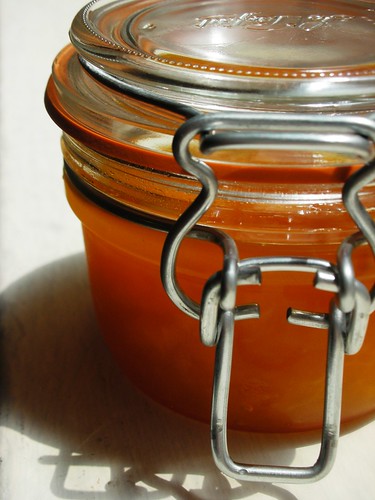
I had a moment of gratitude last weekend. My housemates and I were on retreat, and picnicked by Limantour Beach. We set up a picnic blanket in a relatively grassy spot surrounded by wild douglas irises. We had some oranges, a loaf of bread, almond butter, and two jams. One jam was from Trader Joe’s (blackberry preserves). The other was an apricot preserve. It was made by the elderly mother of an SFTS professor, who harvested the apricot tree in the backyard, sliced, cooked, and canned dozens of jars, and gave us some as a gift. Both jams were delicious. However, only one elicited feelings of gratitude. I was entitled to the blackberry, because I handed a few dollars to the clerk at TJ’s. I had no such claim on Grandma Betty’s Apricot Special.

What are you grateful for today?
What have you received as a gift?
...and I wonder what life would be like if we did less buying and selling, and more giving and receiving.
Gratitude is an expression of thanks to someone or something for a benefit given to us, which we did not deserve or earn. Regularly reflecting on gratitude (an activity as simple as keeping a journal, and each night writing down 5 things for which we were grateful that day) has well-documented positive effects on our lives, moods, actions, and health.
Psalm 147:7-9
Sing to the LORD with thanksgiving;
make music to our God upon the harp.
God covers the heavens with clouds,
prepares rain for the earth,
makes grass grow on the hills.
God gives food to flocks and herds,
and to the young ravens when they cry.
Gratitude is an important part of our Biblical tradition. If the creation stories of the Bible don’t tell us exactly how the earth was made, they do tell us one important thing: we didn’t make it ourselves. Neither did we do anything to deserve the earth and its richness. We are not entitled to it – we are privileged to enjoy it.
I had a moment of gratitude last weekend. My housemates and I were on retreat, and picnicked by Limantour Beach. We set up a picnic blanket in a relatively grassy spot surrounded by wild douglas irises. We had some oranges, a loaf of bread, almond butter, and two jams. One jam was from Trader Joe’s (blackberry preserves). The other was an apricot preserve. It was made by the elderly mother of an SFTS professor, who harvested the apricot tree in the backyard, sliced, cooked, and canned dozens of jars, and gave us some as a gift. Both jams were delicious. However, only one elicited feelings of gratitude. I was entitled to the blackberry, because I handed a few dollars to the clerk at TJ’s. I had no such claim on Grandma Betty’s Apricot Special.
What are you grateful for today?
What have you received as a gift?
...and I wonder what life would be like if we did less buying and selling, and more giving and receiving.
Wednesday, April 6, 2011
Wisdom and Milk

Exciting new developments in the world of biotechnology: Cows can now produce human milk. That's right. Read all about it on the UK's Telegraph.
Leaving aside issues of veganism, animal rights, and whether it's really desireable to nurse from other animals, when we were weaned off our human mother's milk decades ago... there are other questions.
Really, the bazillion dollar question is. "Just because we can, should we?"
We know how to do it. Well, sort of. More than half the first batch of genetically modified cows died, for unknown reasons, but that's probably a minor glitch in the system that can be worked out, eh?
We know that there are certain nutrients found in human milk that are lacking in cow's milk and in most baby formulas. For babies in need these are crucial. We can now turn cattle into living factories for essential nutrients. Awesome?
Genetically modifying plants and animals is a whole can of worms. My Material Theology class did a lot of work on debating their merits and dangers. My side (arguing against genetic modification) acted it out: we placed ourselves in a divine council, and God heard arguments against the dangers of GMO agriculture. In our heavenly council, there was an American farmer who had lost his land due to the monopolization process, an Indian farmer whose land was ruined by bad farming practices, and an activist talking about the agricultural-military-industrial complex. Jesus finally took center stage (in a kilt, to keep a bit of a gender balance - this is the GTU after all) and reminded people of the lessons of Job... to which I now turn.
The book of Job is in the genre of wisdom literature. It is a long debate about the merits of various theologies. How can you explain when bad things happen to good people? Job and his friends debate this for 37 long chapters. Then finally God speaks up:
YHWH answered Job out of the whirlwind:
“Who is this that darkens counsel by words without knowledge?
Gird up your loins like a man,
I will question you, and you shall declare to me.
“Where were you when I laid the foundation of the earth?
Tell me, if you have understanding.
Who determined its measurements--surely you know!
Or who stretched the line upon it?
On what were its bases sunk,
or who laid its cornerstone
when the morning stars sang together
and all the heavenly beings shouted for joy?
God further interrogates Job - he may know about domestic animals, being a man of many herds and flocks, but is he such an expert on the wild animals?
“Do you know when the mountain goats give birth?
Do you observe the calving of the deer?
Can you number the months that they fulfill,
and do you know the time when they give birth,
when they crouch to give birth to their offspring,
and are delivered of their young?
Their young ones become strong, they grow up in the open;
they go forth, and do not return to them.
We have plenty of the "words without knowledge." We can talk an endless talk about how we think the world works. Yes, we may understand enough to perform open-heart surgery, and fertilize ourselves in vitro, and drill for oil, but when the next earthquake is coming we really don't know. We can splice the genome apart and together again, but even the best-cared-for pregnancies often miscarry, and no doctor can explain it. We can attack HIV, but we certainly cannot conquer it.
In the face of the wonders created around us, we ought not to stifle our own creativity. But let us never forget the limits of our knowledge. Knowing that there is a God, a power higher than our best intelligence, reminds us to be humble with our creations.
The cows who survive long enough to produce the wonder-milk may have any number of health defects - we simply do not know what we have done to them when we spliced their genes. But for that matter, we choose not to know a lot about animals, as long as they do what we want them. We purposefully ignore the details of their gastrointestinal systems, feeding cattle on corn because it's cheap, and because given the right amount of antibiotics they'll survive anyhow. We know how to manipulate animals to our desires, but we truly do not know, with God's masterful knowledge, what it is that makes them healthy.
God is painted, in Job, as a caring and skillful creator. God is the one who DOES know when a wild deer crouches to give birth, and what a raven needs to eat, how to bring forth grass on the earth, and where the stars travel.
God is the one who truly knows. Let us not be satisfied with the kind of knowledge that gets results, well enough - but let us seek for the true wisdom that God can impart to us through intimate and compassionate ways of living with creation.
Wednesday, March 16, 2011
Our ancestor, the land
This is a small point but an important one.
Leviticus, again – sorry to you who are Leviticus-haters – here we have a concluding chapter, where the blessings and are laid out – the blessings as reward for good behavior, curses as recompense for unfaithfulness. Blessings are abundance, fruit, grain, and peace. Curses are enemy armies, pestilence and wild animals, and the wasting and withering of your crops and fruit trees. But even after many curses, the land is given a “sabbatical” to rest, and if the people repent, God’s favor will return:
Lev 26:40-42 But if they confess their iniquity and the iniquity of their ancestors, in that they committed treachery against me and, moreover, that they continued hostile to me—so that I, in turn, continued hostile to them and brought them into the land of their enemies; if then their uncircumcised heart is humbled and they make amends for their iniquity, then will I remember my covenant with Jacob; I will remember also my covenant with Isaac and also my covenant with Abraham, and I will remember the land.
These fine fellows usually appear in age order: Abraham, Isaac, and Jacob (Num 32:11, Dt 1:8 and throughout Deuteronomy, Kings, Chronicles, Psalm 105:9, I could go on and on). Some people look at this verse in Leviticus and say, ha, isn’t that funny, they reversed the order! Here it’s Jacob, Isaac, and Abraham.
Don’t laugh it off. There must actually be a reason for this. In the context of such a land-loving book, it is not enough to command gentle and holy treatment of the land. One must be reminded that God has a long-lasting and important relationship with the land. Here, in reverse order, they begin with the most recent covenant (jacob), move back to his father’s covenant (isaac), and HIS father’s covenant (abraham) – but the relationship older and more important than any of the above is God’s relationship to the land. There is no covenant between the land and God, but the land itself is a kind of covenant, a living, adapting, changing token of the relationship between God and humanity. For a people defined by their ancestors, to put God in the place in a lineage where Abraham’s father should be is a high honor indeed. It’s as if the land itself were their original ancestor, and God’s original partner in the relationship to humanity.

Leviticus, again – sorry to you who are Leviticus-haters – here we have a concluding chapter, where the blessings and are laid out – the blessings as reward for good behavior, curses as recompense for unfaithfulness. Blessings are abundance, fruit, grain, and peace. Curses are enemy armies, pestilence and wild animals, and the wasting and withering of your crops and fruit trees. But even after many curses, the land is given a “sabbatical” to rest, and if the people repent, God’s favor will return:
Lev 26:40-42 But if they confess their iniquity and the iniquity of their ancestors, in that they committed treachery against me and, moreover, that they continued hostile to me—so that I, in turn, continued hostile to them and brought them into the land of their enemies; if then their uncircumcised heart is humbled and they make amends for their iniquity, then will I remember my covenant with Jacob; I will remember also my covenant with Isaac and also my covenant with Abraham, and I will remember the land.
These fine fellows usually appear in age order: Abraham, Isaac, and Jacob (Num 32:11, Dt 1:8 and throughout Deuteronomy, Kings, Chronicles, Psalm 105:9, I could go on and on). Some people look at this verse in Leviticus and say, ha, isn’t that funny, they reversed the order! Here it’s Jacob, Isaac, and Abraham.
Don’t laugh it off. There must actually be a reason for this. In the context of such a land-loving book, it is not enough to command gentle and holy treatment of the land. One must be reminded that God has a long-lasting and important relationship with the land. Here, in reverse order, they begin with the most recent covenant (jacob), move back to his father’s covenant (isaac), and HIS father’s covenant (abraham) – but the relationship older and more important than any of the above is God’s relationship to the land. There is no covenant between the land and God, but the land itself is a kind of covenant, a living, adapting, changing token of the relationship between God and humanity. For a people defined by their ancestors, to put God in the place in a lineage where Abraham’s father should be is a high honor indeed. It’s as if the land itself were their original ancestor, and God’s original partner in the relationship to humanity.

Sunday, February 27, 2011
Consider the Lilies, How They Fade.
TEXT: Matthew 6:24-34
Preached today at Montclair. Enjoy.
This is a scandalous text. Throughout the history of Christianity, people have appreciated the poetry of the lilies and the birds, but they also have tried very hard to find ways to get around it, to say somehow that it doesn’t say what it says. What it says is: Consider the lilies. Don’t worry. Consider the birds of the air. God takes care of them, and therefore God will take even better care of you.
This is a problematic statement, in all kinds of ways. The first problem that comes to my mind is a Peanuts cartoon, in which Woodstock the bird hears this verse, asking if a human being is not “of more value than many birds,” and he goes off totally depressed, and Snoopy has to cheer him up. That verse is not fair to birds.
The second scandal, this one a little more serious, is that it doesn’t necessarily WORK, at least not to cure us of our worrying. If you don’t believe me, find an anxious person – I bet there are many of us who identify as such – tell them to consider the lilies, and stuff some flowers under their nose and see if they are cured. Better yet, tell them “the Bible says, you shouldn’t be anxious,” and watch them have a panic attack because now they feel guilty for feeling anxious. I do not recommend using this as a treatment plan for anxiety.
The text is also scandalous because it seems to tell us not to work. And what would happen to our society if we all stopped working? We can’t ALL be hunter-gatherers in the woods, there just isn’t enough to go around.
What’s more, it’s upsetting because we know we need more than food and clothing… education, for example, and technology… so it’s insulting to compare our complex needs and requirements with the simple existence of birds and lilies. This text is riddled with problems. How can we interpret it?
One hint for interpretation is that Jesus may not have addressed this message to everyone. The Sermon on the Mount begins by saying “his disciples came to him,” so it probably includes the twelve famous disciples, and an inner circle including women as well, but it’s not addressed to “everyone.” These are verses of particular encouragement to a particular group of people. Some of them were fishermen, but some may have been farmers, and some of the women were employed in spinning and weaving. The point is that these are people who used to sow and reap and labor and spin, who no longer work in those vocations, because they have given them up to travel on the road with Jesus full-time. These are people who know well what it is to work, but who have willingly put their work behind them. By leaving their work to follow Jesus, the disciples have abandoned their means of supporting themselves. So maybe the message about birds and lilies isn’t meant to challenge us to STOP working, but to console people who are no longer working.
So some of us can heave a sigh of relief. Jesus isn’t addressing this to us, after all! Some, however, are in a similar life situation – where you do not sow or reap or labor or spin – some are there willingly, because you have saved up enough from your previous work to retire or take a self-supported sabbatical…. But some are in this kind of situation unwillingly, because of injury or misfortune or old age. Keep in mind that regardless of how we are living now, most of us at some point will face such a situation, where we are no longer ABLE to work, and these words will take on a new meaning for us.
When you can’t work, and your savings run out, these words need no interpretation. They speak for themselves, with good advice. God loves you. Don’t worry about the future. Just take it one day at a time.
I did my internship in the hardscrabble hills of Eastern Oregon, where many people live off the produce of the land and have known what it is, at least at some point, to be in need. One woman told me that when she had more than enough, she could go out hunting – for fun – and never get a deer, but somehow whenever she was desperate, wondering what she could put on the table for her children, it seemed like a deer would just walk up to her in the woods and offer himself to her. Or a neighbor would ring the doorbell and drive off, leaving a basket of food just exactly when she needed it. Some call this coincidence and some call it providence. In such situations, the verses about lilies and birds need no explanation. They are a comfort and consolation.
But for those of us who fortunately have clothes and food and don’t need that kind of comforting, what does this passage do for us? What can we say about it?
No matter what our context, everyone can hear this as a challenge and an invitation to simplicity. Of which most of us are in desperate need.
Everything around us teaches us to fight, to scramble, to survive. Work harder, worry more, save more, plan more. We’ve been groomed our whole lives for the culture of competition and the evolutionary scramble to the top, and along the way, if we step on some other people, that’s just the cost of doing business. We push them down so we can stand on their heads, because we need to rise to the top.
But in Jesus’ words of challenge, we are being invited BACKWARDS, going down that ladder of competition instead of up it. We’re being invited to remember that we are, simply, animals; to compare ourselves to plants. But that is not easy to do.
Consider the lilies – how they grow.
Consider how they poke their heads up, early in the spring,
Consider how they bloom, how gorgeous they look.
But consider how they fade, how they wilt, how they scatter their seeds and die back down to a bare root for the winter.
Consider the birds – how they live.
Consider the food they find all around them without working and farming the land.
But consider the birds that find NO food around them.
Consider the birds of the Gulf Coast.
Consider the birds whose habitat is being destroyed.
I don’t want to compare myself to that kind of bird! So we might think that here the metaphor breaks down, that Jesus only wanted us to naively consider the happy birds. But let’s try to take it farther.
Consider a lily in harsher climate than ours, one that came up too soon, one that has been snowed on – a flower that is freezing, wilting, and dying.
It still doesn’t worry! It still doesn’t fret about the future, or the seeds it hasn’t produced. The grass of the field is alive today, and tomorrow it is burned in the oven, and all of this is part of its natural life cycle.
I remember as a child when our family’s cat was slowly dying. I was worried about him. Was he scared? Was he confused? And although no one knows what was really going on in the cat’s head, my mother told me that cats don’t worry about dying. I don't know where this belief comes from, but in some sense I believe that animals know things that we have forgotten, and one of those things is that death can be a friend.
It’s not just in the animal world that we see such radical trust and acceptance. In Jesus’ example himself we see that although he admitted his fear, in the end he was not too worried to give his life away.
It’s not necessarily because Jesus believed he was going to heaven. That idea took a long time for the early Christians to develop. Even before we put pearly gates and golden streets in our minds, Jesus and his disciples were able to face death as a transition, knowing that even death could not separate them from the boundless love of God.
It’s a hard world out there. And we are taught to fight, and to deny the reality that we will ever die. We keep our mortality at bay by constantly struggling up the ladder of achievement. We may not THINK we’re stepping on anyone’s shoulders to get to where we are, but we still buy shoes made in sweat shops, and blueberries picked by underpaid immigrants, and we fill our cars with the same sludge that swamped the Gulf of Mexico. We are stepping on a lot of shoulders – whether human or any other creature. Because we have to keep ourselves UP, you see, and we will sacrifice anything to keep ourselves on top. But the painful truth is that this struggle doesn’t even work. It hurts us, it hurts others, it lays waste the earth and pollutes the seas. We are finding more and more that we cannot be healthy and whole while we destroy the world around us. When we get to this point we realize – even if the Bible doesn’t tell us how the earth was really created, it does tell us one important thing: we didn’t create it ourselves. And for the most part, we can’t control it either.
The good news that comes with this recognition is that another way lies open before us. We can recognize the world around us as a gift, and we can take a path of simplicity, of trust, of natural connection. On this path we will not be the ones on the top, who control everything from a place of untouchability, immune to every disaster – but just grateful, humble participants.
I wonder, what this path will look like?
For some of you I may have just touched very close to home by mentioning the fear of death. For some that’s a nearby reality, and I certainly can’t pretend to know what you should do, especially in questions about your medical care. I, and we as a church, can only offer our respect and honor for the path you walk, and offer a blessing – may you trust and feel God’s presence, day by day. May God’s love protect and sustain you, day by day.
For others this path may lead to some self-examination. How much of my energy do I spend competing? How much do I put into building my power base, gathering my supporters, preparing arguments for those who will disagree with me? What would happen if I showed up open-handed instead of armed and defensive? Can I be simply one part of a greater whole, or do I feel I “need” to be on top?
What if we even took this farther – out of our personal relationships? What if I saw myself as a sister or brother to the non-human creatures of the earth? It takes a radical shift to get there, and to really escape from the default position, which is that the natural world doesn’t matter except when it’s useful to us. We could act, instead, as if the lily’s joy were our joy, and the Gulf Coast seagull’s pain were our pain.
It raises the question of generosity. Do I hoard my treasure like a dragon, or do I give it away trusting that others will do good things with what they receive?
It raises the question of sufficiency. Do I have enough? Am I in need? Do I have clothing and footware to spare? Isn’t there a three-week supply of food in my pantry? Or am I in need?
Sallie McFague writes: “Theology by relatively comfortable North American Christians ought not to focus on personal salvation, in this world or the next, but on lifestyle limitations, on developing a philosophy of “enoughness,” and realizing that the cruciform way of Christ means making sacrifices so that others might live.”
But this path is not about bucking up and being grim. It’s about truly being grateful for the abundance we DO have. And it’s about joy. Considering the natural world around us, we do see death and suffering, but we also see abundant life, multiplying like crazy every springtime, and now is a great time to be out in the parks looking for it. When we see the world with the Loving Eye of kinship rather than the Arrogant Eye of objectification, we ourselves will be happier.
This path is liberating. Because with all we have done to keep other people and creatures down, we find we have been bound, ourselves, in the same oppression. As we free other people, we find we are freed. And as we work to heal the earth, the earth works to heal us.
Jesus invites us to take a radically different path from the one we have learned… but deep in our souls, somehow we know that it is joyful, and beautiful, and good. Jesus invites us to receive the grace that allows us to back off our competitive scramble and take our rightful place in the order of things.
Let us receive that grace from God…
A grateful heart
Generous hands
And feet standing on the solid ground of God’s good earth, rather than climbing on the shoulders of those we must push down.
Preached today at Montclair. Enjoy.
This is a scandalous text. Throughout the history of Christianity, people have appreciated the poetry of the lilies and the birds, but they also have tried very hard to find ways to get around it, to say somehow that it doesn’t say what it says. What it says is: Consider the lilies. Don’t worry. Consider the birds of the air. God takes care of them, and therefore God will take even better care of you.
This is a problematic statement, in all kinds of ways. The first problem that comes to my mind is a Peanuts cartoon, in which Woodstock the bird hears this verse, asking if a human being is not “of more value than many birds,” and he goes off totally depressed, and Snoopy has to cheer him up. That verse is not fair to birds.
The second scandal, this one a little more serious, is that it doesn’t necessarily WORK, at least not to cure us of our worrying. If you don’t believe me, find an anxious person – I bet there are many of us who identify as such – tell them to consider the lilies, and stuff some flowers under their nose and see if they are cured. Better yet, tell them “the Bible says, you shouldn’t be anxious,” and watch them have a panic attack because now they feel guilty for feeling anxious. I do not recommend using this as a treatment plan for anxiety.
The text is also scandalous because it seems to tell us not to work. And what would happen to our society if we all stopped working? We can’t ALL be hunter-gatherers in the woods, there just isn’t enough to go around.
What’s more, it’s upsetting because we know we need more than food and clothing… education, for example, and technology… so it’s insulting to compare our complex needs and requirements with the simple existence of birds and lilies. This text is riddled with problems. How can we interpret it?
One hint for interpretation is that Jesus may not have addressed this message to everyone. The Sermon on the Mount begins by saying “his disciples came to him,” so it probably includes the twelve famous disciples, and an inner circle including women as well, but it’s not addressed to “everyone.” These are verses of particular encouragement to a particular group of people. Some of them were fishermen, but some may have been farmers, and some of the women were employed in spinning and weaving. The point is that these are people who used to sow and reap and labor and spin, who no longer work in those vocations, because they have given them up to travel on the road with Jesus full-time. These are people who know well what it is to work, but who have willingly put their work behind them. By leaving their work to follow Jesus, the disciples have abandoned their means of supporting themselves. So maybe the message about birds and lilies isn’t meant to challenge us to STOP working, but to console people who are no longer working.
So some of us can heave a sigh of relief. Jesus isn’t addressing this to us, after all! Some, however, are in a similar life situation – where you do not sow or reap or labor or spin – some are there willingly, because you have saved up enough from your previous work to retire or take a self-supported sabbatical…. But some are in this kind of situation unwillingly, because of injury or misfortune or old age. Keep in mind that regardless of how we are living now, most of us at some point will face such a situation, where we are no longer ABLE to work, and these words will take on a new meaning for us.
When you can’t work, and your savings run out, these words need no interpretation. They speak for themselves, with good advice. God loves you. Don’t worry about the future. Just take it one day at a time.
I did my internship in the hardscrabble hills of Eastern Oregon, where many people live off the produce of the land and have known what it is, at least at some point, to be in need. One woman told me that when she had more than enough, she could go out hunting – for fun – and never get a deer, but somehow whenever she was desperate, wondering what she could put on the table for her children, it seemed like a deer would just walk up to her in the woods and offer himself to her. Or a neighbor would ring the doorbell and drive off, leaving a basket of food just exactly when she needed it. Some call this coincidence and some call it providence. In such situations, the verses about lilies and birds need no explanation. They are a comfort and consolation.
But for those of us who fortunately have clothes and food and don’t need that kind of comforting, what does this passage do for us? What can we say about it?
No matter what our context, everyone can hear this as a challenge and an invitation to simplicity. Of which most of us are in desperate need.
Everything around us teaches us to fight, to scramble, to survive. Work harder, worry more, save more, plan more. We’ve been groomed our whole lives for the culture of competition and the evolutionary scramble to the top, and along the way, if we step on some other people, that’s just the cost of doing business. We push them down so we can stand on their heads, because we need to rise to the top.
But in Jesus’ words of challenge, we are being invited BACKWARDS, going down that ladder of competition instead of up it. We’re being invited to remember that we are, simply, animals; to compare ourselves to plants. But that is not easy to do.
Consider the lilies – how they grow.
Consider how they poke their heads up, early in the spring,
Consider how they bloom, how gorgeous they look.
But consider how they fade, how they wilt, how they scatter their seeds and die back down to a bare root for the winter.
Consider the birds – how they live.
Consider the food they find all around them without working and farming the land.
But consider the birds that find NO food around them.
Consider the birds of the Gulf Coast.
Consider the birds whose habitat is being destroyed.
I don’t want to compare myself to that kind of bird! So we might think that here the metaphor breaks down, that Jesus only wanted us to naively consider the happy birds. But let’s try to take it farther.
Consider a lily in harsher climate than ours, one that came up too soon, one that has been snowed on – a flower that is freezing, wilting, and dying.
It still doesn’t worry! It still doesn’t fret about the future, or the seeds it hasn’t produced. The grass of the field is alive today, and tomorrow it is burned in the oven, and all of this is part of its natural life cycle.
I remember as a child when our family’s cat was slowly dying. I was worried about him. Was he scared? Was he confused? And although no one knows what was really going on in the cat’s head, my mother told me that cats don’t worry about dying. I don't know where this belief comes from, but in some sense I believe that animals know things that we have forgotten, and one of those things is that death can be a friend.
It’s not just in the animal world that we see such radical trust and acceptance. In Jesus’ example himself we see that although he admitted his fear, in the end he was not too worried to give his life away.
It’s not necessarily because Jesus believed he was going to heaven. That idea took a long time for the early Christians to develop. Even before we put pearly gates and golden streets in our minds, Jesus and his disciples were able to face death as a transition, knowing that even death could not separate them from the boundless love of God.
It’s a hard world out there. And we are taught to fight, and to deny the reality that we will ever die. We keep our mortality at bay by constantly struggling up the ladder of achievement. We may not THINK we’re stepping on anyone’s shoulders to get to where we are, but we still buy shoes made in sweat shops, and blueberries picked by underpaid immigrants, and we fill our cars with the same sludge that swamped the Gulf of Mexico. We are stepping on a lot of shoulders – whether human or any other creature. Because we have to keep ourselves UP, you see, and we will sacrifice anything to keep ourselves on top. But the painful truth is that this struggle doesn’t even work. It hurts us, it hurts others, it lays waste the earth and pollutes the seas. We are finding more and more that we cannot be healthy and whole while we destroy the world around us. When we get to this point we realize – even if the Bible doesn’t tell us how the earth was really created, it does tell us one important thing: we didn’t create it ourselves. And for the most part, we can’t control it either.
The good news that comes with this recognition is that another way lies open before us. We can recognize the world around us as a gift, and we can take a path of simplicity, of trust, of natural connection. On this path we will not be the ones on the top, who control everything from a place of untouchability, immune to every disaster – but just grateful, humble participants.
I wonder, what this path will look like?
For some of you I may have just touched very close to home by mentioning the fear of death. For some that’s a nearby reality, and I certainly can’t pretend to know what you should do, especially in questions about your medical care. I, and we as a church, can only offer our respect and honor for the path you walk, and offer a blessing – may you trust and feel God’s presence, day by day. May God’s love protect and sustain you, day by day.
For others this path may lead to some self-examination. How much of my energy do I spend competing? How much do I put into building my power base, gathering my supporters, preparing arguments for those who will disagree with me? What would happen if I showed up open-handed instead of armed and defensive? Can I be simply one part of a greater whole, or do I feel I “need” to be on top?
What if we even took this farther – out of our personal relationships? What if I saw myself as a sister or brother to the non-human creatures of the earth? It takes a radical shift to get there, and to really escape from the default position, which is that the natural world doesn’t matter except when it’s useful to us. We could act, instead, as if the lily’s joy were our joy, and the Gulf Coast seagull’s pain were our pain.
It raises the question of generosity. Do I hoard my treasure like a dragon, or do I give it away trusting that others will do good things with what they receive?
It raises the question of sufficiency. Do I have enough? Am I in need? Do I have clothing and footware to spare? Isn’t there a three-week supply of food in my pantry? Or am I in need?
Sallie McFague writes: “Theology by relatively comfortable North American Christians ought not to focus on personal salvation, in this world or the next, but on lifestyle limitations, on developing a philosophy of “enoughness,” and realizing that the cruciform way of Christ means making sacrifices so that others might live.”
But this path is not about bucking up and being grim. It’s about truly being grateful for the abundance we DO have. And it’s about joy. Considering the natural world around us, we do see death and suffering, but we also see abundant life, multiplying like crazy every springtime, and now is a great time to be out in the parks looking for it. When we see the world with the Loving Eye of kinship rather than the Arrogant Eye of objectification, we ourselves will be happier.
This path is liberating. Because with all we have done to keep other people and creatures down, we find we have been bound, ourselves, in the same oppression. As we free other people, we find we are freed. And as we work to heal the earth, the earth works to heal us.
Jesus invites us to take a radically different path from the one we have learned… but deep in our souls, somehow we know that it is joyful, and beautiful, and good. Jesus invites us to receive the grace that allows us to back off our competitive scramble and take our rightful place in the order of things.
Let us receive that grace from God…
A grateful heart
Generous hands
And feet standing on the solid ground of God’s good earth, rather than climbing on the shoulders of those we must push down.
Wednesday, February 23, 2011
Waiting for the Season

Strawberries are coming into season. At least in the warmer parts of California. As of this week, they are showing up at my farmer’s market, which is enough for me to say FAIR GAME! Of course I write this here with great trepidation, because my kind readers, being from all over the country, may hurl spite and jealousy in my general direction. But just think of what you can look forward to.
Strawberries from the grocery store just don’t do it for me. The white and mealy insides, the lack of juicyness, their ridiculous size – they smack of unnaturalness. The worst are the strawberries you buy in November. They’ve been flown from Chile or somewhere, and aborted prematurely off their vine so they can survive the flight before ripening (and rotting). But a local, fresh strawberry is something else entirely. Red all the way through, ripened thoroughly on the vine, intoxicating in their sweetness, and so delicate they will bruise in a minute, if you don’t eat them – nevermind flying them to another country. They are truly worth waiting for.
The Bible verse that most immediately comes to mind is Ps 104:27. “[all creatures] look to you to give them their food in due season; you open wide your hand and satisfy the needs of every living creature.”
The proper course of things, the rightness of seasonal changes, the appropriate time to receive and to eat – the goodness of waiting!
But a more ominous verse comes to mind as well. This is from the wilderness wanderings, Numbers 11:4-6: “The rabble among them had a strong craving; and the Israelites also wept again, and said, ‘If only we had meat to eat! We remember the fish we used to eat in Egypt for nothing, the cucumbers, the melons, the leeks, the onions, and the garlic; but now our strength is dried up, and there is nothing at all but this manna to look at.”’
The truth is, we can get our cucumbers and melons any season of the year, but we get it at a price. We can have raspberries on our Christmas desserts, flown on little petrochemical wings from faraway lands, to save us from the boring manna diet of what CAN be grown (or stored) locally in the winter. We get it at a price: pollution across our skies, insecurity for our own local farmers, and mealy white strawberries.
The Israelites got access to their wonderful, Nile-irrigated vegetables while they were in Egypt, and got it at a price: their freedom. It is useless to pretend we do not also give up our freedom when we allow Dole and other multinational corporations to feed us, hook us in, teach us the attitude of entitlement that keeps the dollars flowing and the strawberries flying.
Barbara Kingsolver writes in vivid terms about our lack of (gastronomic) patience, which may be said to have negative effects on other realms of society. Patience and restraint, great virtues, are only applied selectively in our culture: “…browbeating our teenagers with the message that they should wait for sex, for example. Only if they wait to experience intercourse under the ideal circumstances (the story goes), will they know its true value. “Blah, blah, blah,” hears the teenager: words issuing from a mouth that can’t even wait for the right time to eat tomatoes, but instead consumes tasteless ones all winter to satisfy a craving for everything now. We’re raising our children on the definition of promiscuity if we feed them a casual, indiscriminate mingling of foods from every season plucked from the supermarket, ignoring how our sustenance is cheapened by wholesale desires.” (Barbara Kingsolver, “Animal, Vegetable, Miracle.” page 31).
Dare to cut loose and be free. Cut loose from Pharaoh’s addictive provisions of food-with-a-price, and wait for the Real Deal. I promise (though I have perhaps not waited as long as you in colder climes will) that the strawberries will taste way better.
Wednesday, February 2, 2011
The Dandelion Tree

It's hard to understand about 80% of the Bible if you don't live in an agricultural society, and do at least a little bit of growing things. And sometimes even the Bible makes it hard to understand what's going on.
Take Matthew 13:31-32: “The kingdom of heaven is like a mustard seed that someone took and sowed in his field; it is the smallest of all the seeds, but when it has grown it is the greatest of shrubs and becomes a tree, so that the birds of the
air come and make nests in its branches.”
Right. Great story. The Kingdom (or the realm of God, as I like to say) is a thing that grows. When we tell it in Godly Play with the kids, we roll up a piece of cloth and hide it in our hands and unroll it - it's shaped like a tree. The kingdom is like something small becoming big.
uh-uh. We're missing a major part of the story, because, well, have you ever seen a mustard tree? GUESS WHAT - mustard is a weed. A shrub, maybe a bush at best. Mainly, a weed. It spreads ferociously. And when the birds of the air come and make nests in its branches, I'm slightly concerned given that earlier in the chapter, the story of the "sower and the seed" was told, and the birds' role in that was to eat the seeds on the path. Birds aren't necessarily great for your seed-sowing endeavors. So the story could be re-told....
The Realm of God is like a dandelion, which is a small seed when blowing on the wind - it is too small to catch, even, or to keep off your lawn - but when it grows it becomes a TREE, full of pigeons and crows and rats and squirrels.
(not as pleasant).
The thing with trees, is that trees and especially the "greatest" trees, the majestic cedars, were often compared to the house of Israel. It's not just about size, it's about your past as well. YHWH has a long history of planting and uprooting that house - that tree. Ezekiel prophesied that a cedar tree would be planted on mount Zion, and that all kinds of birds would come to roost in it. And now there's another plant, a lowly shrub, which will take its place and shelter its birds. Ezekiel said "all the trees of the forest will know that I the LORD bring down the tall tree and make the low tree grow tall. I dry up the green tree and make the dry tree flourish." .... but he may not have imagined that the "low tree" and the "dry tree" wouldn't even be a tree, but a weed. If cedar trees are majestic institutions, mustard plants and dandelions are subversive movements. And Jesus has deliberately mixed these images, creating a mustard plant which does what cedar trees do.
What are we? As followers of the parable-telling Christ, are we planting cedar trees, pruning rosebushes, training topiaries in a good-looking, majestic church? Or are we tossing dandelion seed to the wind like playful children, spreading mustard seed in the dry and rocky ground where it can dig its tenacious roots in?
Here's the other beautifully disorienting thing. Mustard is an annual. It does NOT grow bigger and bigger as time goes on; it dies every year and grows again from the seed it has spread abroad. So if we and all the nations of the earth are to come like birds and roost in the shade of the mustard plant, we will not be guaranteed that there even IS a particular mustard plant in the same place it was last year. The Realm of God shifts and grows and changes. Notably UNLIKE cedar trees. Do we shift and grow and change?
The kingdom of God is like a dandelion tree. May it be so. Amen.
Wednesday, January 26, 2011
Working or worshipping the land?

When Adam is placed in the garden of Eden he is placed in relationship to the fertile soil for which he is named: he is to “till it and keep it,” if you read the NRSV, or to “work it and take care of it,” in the NIV, “work the ground and keep it in order” if you’re partial to Eugene Peterson’s Message, or “tend and watch over it” if you read the New Living Translation.
What on earth is he doing?
Two Hebrew verbs. One is abad, to “serve,” most literally, as a servant serves a master, or to “worship,” as a person does to God. It does have the rarer meaning of “to work” without an indication of for whom you work – but usually it indicates a service rendered by an inferior for a superior. My California soul is deeply delighted at the notion of our first ancestor “worshipping” the soil. And I’m also thrilled to see that there was a positive paradigm for a human’s labor rendered to the soil, before the fall and expulsion from Eden whereupon we are told “in toil you shall eat of [the fruit of the land] all the days of your life.
Two is shamar, to “watch,” most literally, to observe with one’s eyes, OR as a watchman watches over a castle, to keep, protect, or preserve. I respect and appreciate the idea of protecting and preserving the land, but there’s also the aspect of watching it that takes a learner’s eye – to learn what the land can do, what it needs, how it will react to rain and sun and tilling and any other interaction it may have.
Ellen Davis comes up with four words: when it comes to the land, Adam is to “work it and serve it, observe it and preserve it.” We must fall to our knees, learn from it, respect its limitations, appreciate its art, marvel at its wonders, protect them from harm. This is our call.
(Scripture, Culture, Agriculture: An Agrarian Reading of the Bible. p30)
Wednesday, January 19, 2011
Leviticus rediscovered

I commend to you a little reading in Leviticus.
What?
Nobody commends Leviticus. That’s the backwardest part of the Bible. When my youth group performed the “Bible in 15 minutes” we summarized Leviticus as:
Don’t have sex with your daughter.
Don’t have sex with your sister-in-law.
Don’t have sex with your great-aunt.
If you have an oozy skin discharge, OR if you touch a corpse…
And in the interest of fitting the rest of the Bible into 15 minutes, the whole cast yelled “ew gross!” and ousted Leviticus from the stage.
Today, I commend to you a few verses from Leviticus. Specifically, from the collection known as the “Holiness Code” (chs 17-26). You can skip the parts about whom not to have sex with (just do it with someone you love and aren't related to, ok?), and go on to chapter 19.
Now you need a little Hebrew, but I’ll provide it. NOTICE how people, creatures, and land are all treated similarly, even with the same words: you shall not reap the edge (pe’a) of your field (19:9) nor will you shave the edge (pe’a) of your beard (19:27). NOTICE that your fruit trees are to remain uncircumcised (‘arelim 19:23) for three years, whereupon its first “cutting” or harvest of fruit is dedicated to the Lord. If that’s not telling us “treat your trees like people,” I don’t know what it is. NOTICE that the land doesn’t just take male metaphors, it’s female too: “Do not profane your daughter by making her a prostitute, that the land not become prostituted and full of depravity” (19:29).
This is the same great chapter that tells us “love your neighbor as yourself” (19:18) and even “you shall love the alien as yourself, for you were aliens in the land of Egypt” (19:34)… and I wonder. Hidden under this code, are we actually being told…
*to tenderly care for our fields as we do our own bodies?
*to protect our land as fiercely as we protect our daughters?
*to honor and celebrate the fruit of a tree the same way we would celebrate the life of a baby boy?
I commend to you a little reading in Leviticus 19. Enjoy.
Wednesday, January 12, 2011
Humus humans
Many of us have heard too many times in the Adam & Eve story that “Adam means dirt.” Humans are made of humus, blah de blah. How cool and ancient and mythical and overimaginative of those ancient Hebrews – right?
No, there’s a little more to it than that.
First of all – “dirt.” Mistranslated “dust of the ground” by King James and the RSV family of Bibles, the word means “fertile soil.” Adamah in the Hebrew (you see how closely it’s related to Adam). This is a particular word, not just any old dirt. It is soil – arable land. Think not about the dust of a desert, but about potting soil… an obviously fertile soil, the stuff from which all land plants and animals ultimately take their nourishment. But our potting soil is usually pretty blackish brown, and this is not the adamah’s color. The words adam and adamah are not only related to one another, but are related to the word adom, “ruddy,” reddish. This is particular soil – for the Israelites this is the color of the hills of home.
It tells them not only THAT God made them, but WHERE God made them. Egyptian soil and Babylonian soil have nothing on that particular soil from which a chosen group of people were made.
We can all say that God made us here – on this earth. Some of us have (over the millennia) wandered to northern regions where our skin didn’t need the melanin so much, and so we got a little paler, and so it’s funny, nearly ridiculous, to say white people were made from soil. Contrary to the pictures in many a Children’s Bible, however, people in biblical times didn’t have that problem. They understood that they belonged to that land, as surely as their skintone matched the fertile soil.
In a world of cheap travel, adventure, frequent voluntary relocation, and of the nonvoluntary diaspora and exile of many people-groups… we lose our sense of belonging to a land.
Where do you belong? Where were you made? What color is your dirt? What is the land you cannot abandon?

No, there’s a little more to it than that.
First of all – “dirt.” Mistranslated “dust of the ground” by King James and the RSV family of Bibles, the word means “fertile soil.” Adamah in the Hebrew (you see how closely it’s related to Adam). This is a particular word, not just any old dirt. It is soil – arable land. Think not about the dust of a desert, but about potting soil… an obviously fertile soil, the stuff from which all land plants and animals ultimately take their nourishment. But our potting soil is usually pretty blackish brown, and this is not the adamah’s color. The words adam and adamah are not only related to one another, but are related to the word adom, “ruddy,” reddish. This is particular soil – for the Israelites this is the color of the hills of home.
It tells them not only THAT God made them, but WHERE God made them. Egyptian soil and Babylonian soil have nothing on that particular soil from which a chosen group of people were made.
We can all say that God made us here – on this earth. Some of us have (over the millennia) wandered to northern regions where our skin didn’t need the melanin so much, and so we got a little paler, and so it’s funny, nearly ridiculous, to say white people were made from soil. Contrary to the pictures in many a Children’s Bible, however, people in biblical times didn’t have that problem. They understood that they belonged to that land, as surely as their skintone matched the fertile soil.
In a world of cheap travel, adventure, frequent voluntary relocation, and of the nonvoluntary diaspora and exile of many people-groups… we lose our sense of belonging to a land.
Where do you belong? Where were you made? What color is your dirt? What is the land you cannot abandon?

Wednesday, January 5, 2011
Grounded Scriptures
So I’m a seminarian, a New Yorker transplanted in California, a musician, a Sunday School teacher, a feminist, and an aspiring farmer.
Whaa? You may ask. What kind of well-educated, urban, pulpit-bound woman aspires to spend her days digging in the dirt? What kind of feminist is eager to do more canning and preserving than her grandmother did? Odd, I know. I often keep this part of my self-identity under wraps, because people do just that – “Whaa?” … and then I have to explain about how I might not have to operate a tractor, it could be urban community gardens, or how I could have a seedling nursery… But the fact remains, surprising many – I want to farm. I'm itching for more than a few square feet of land to do it on.
I have to blame a lot of the “why” for this unfortunate vocation on the Bible. Ever since my Old Testament professor Marvin Chaney shouted at our Prophets class “you can’t read this in stained-glass language!” about the sin of land-grabbing, I have had a vivid sense that the Way described and commanded in the biblical texts had plenty to do with how we work, live, spend our money, relate to our neighbor, and how we eat… perhaps more than with how we pray. And through reading (lots of Ellen Davis) and learning (with the Presbyterian Hunger Program roadtrip) I’ve come to believe that the particular realm of how we grow and distribute food in America is drastically opposed to the ideals set out in the Bible.

The rubber hits the road in my new blog series, posted here & elsewhere on Wednesdays, “Grounded Scriptures.” I will search each week for a Bible verse we tend to read in that “stained glass language,” extricate it from my piously cerebral assumptions, and look for a way to understand it in terms of the relationship of God’s people to the land, the soil, and the plants and creatures that grow in and on it.
Read & join in!
http://presbyterian.typepad.com/foodandfaith/
http://pcusablog.blogspot.com/
Whaa? You may ask. What kind of well-educated, urban, pulpit-bound woman aspires to spend her days digging in the dirt? What kind of feminist is eager to do more canning and preserving than her grandmother did? Odd, I know. I often keep this part of my self-identity under wraps, because people do just that – “Whaa?” … and then I have to explain about how I might not have to operate a tractor, it could be urban community gardens, or how I could have a seedling nursery… But the fact remains, surprising many – I want to farm. I'm itching for more than a few square feet of land to do it on.
I have to blame a lot of the “why” for this unfortunate vocation on the Bible. Ever since my Old Testament professor Marvin Chaney shouted at our Prophets class “you can’t read this in stained-glass language!” about the sin of land-grabbing, I have had a vivid sense that the Way described and commanded in the biblical texts had plenty to do with how we work, live, spend our money, relate to our neighbor, and how we eat… perhaps more than with how we pray. And through reading (lots of Ellen Davis) and learning (with the Presbyterian Hunger Program roadtrip) I’ve come to believe that the particular realm of how we grow and distribute food in America is drastically opposed to the ideals set out in the Bible.

The rubber hits the road in my new blog series, posted here & elsewhere on Wednesdays, “Grounded Scriptures.” I will search each week for a Bible verse we tend to read in that “stained glass language,” extricate it from my piously cerebral assumptions, and look for a way to understand it in terms of the relationship of God’s people to the land, the soil, and the plants and creatures that grow in and on it.
Read & join in!
http://presbyterian.typepad.com/foodandfaith/
http://pcusablog.blogspot.com/
Friday, November 27, 2009
Insatiable is Not Sustainable
"Black Friday," here we are. Although I am gladdened by generosity to others, and cool window displays (like the one that Joie de Vivre is going to post pictures of, ahem ahem), and Christmas Carols, I am saddened by the glut of overconsumption we experience in our culture, and yes, I'm calling it for what it is. It isn't a culture of a little too much of a good thing -- it's a culture firmly stuck in overdrive.
I'm a big fan of natural products, eco-friendly anythings, replacing the polyester in our lives with some nice bamboo... but still. When we go on eco-kicks, we tend to just replace everything we have too much of, so too much polyester becomes too much bamboo. Down in California (on my recent vacation) I saw an enormous moving van -- I'm not talking a U-Haul size, I'm talking a Major Truck -- advertising "eco-friendly moving company" on the sides. Yes, ladies and gentlemen, because we have now acquired so much eco-friendly furniture that we can no longer fit it in a regular sized biodeisel-powered moving van. Okay, maybe it wasn't quite an 18-wheeler, but it was HUGE. That is a frikking lot of bamboo. Or am I being judgmental to suggest that a truly eco-friendly denizen of this earth should be able to restrict themselves long enough to fit their belongings in a smaller compartment?
In a New Yorker review of Jonathan Safran Foer's "Eating Animals," as a response to the accusation that vegetarians are sentimentalist about their fuzzy creatures, the quote is printed:
Two friends are ordering lunch. One says, “I’m in the mood for a burger,” and orders it. The other says, “I’m in the mood for a burger,” but remembers that there are things more important to him than what he is in the mood for at any given moment, and orders something else. Who is the sentimentalist?
I think this is spot-on, not just because I "passed" on a very delicious-smelling turkey last night, but because it seems that our moods and whims have come to rule us. We can do all we want to channel our desires into healthier products (bamboo vs polyester) but unless we learn to say "no" to some desires we will never be free of the endless cycle of production, consumption, disposal, and the desperate attempt to cover our own tracks.
For the third year in a row, my family is giving one another cards this Christmas instead of gifts. I know that not everyone's sisters are the brilliant poets that mine are, but I have cherished these cards as much as I would any tangible gift. I commend the practice, and close with the words from St. Suess:
Maybe Christmas, perhaps,
doesn't come from a store.
Maybe Christmas, perhaps,
means a little bit more.
And for more fantastic slogans of the like, check out https://www.adbusters.org/campaigns/bnd

I'm a big fan of natural products, eco-friendly anythings, replacing the polyester in our lives with some nice bamboo... but still. When we go on eco-kicks, we tend to just replace everything we have too much of, so too much polyester becomes too much bamboo. Down in California (on my recent vacation) I saw an enormous moving van -- I'm not talking a U-Haul size, I'm talking a Major Truck -- advertising "eco-friendly moving company" on the sides. Yes, ladies and gentlemen, because we have now acquired so much eco-friendly furniture that we can no longer fit it in a regular sized biodeisel-powered moving van. Okay, maybe it wasn't quite an 18-wheeler, but it was HUGE. That is a frikking lot of bamboo. Or am I being judgmental to suggest that a truly eco-friendly denizen of this earth should be able to restrict themselves long enough to fit their belongings in a smaller compartment?
In a New Yorker review of Jonathan Safran Foer's "Eating Animals," as a response to the accusation that vegetarians are sentimentalist about their fuzzy creatures, the quote is printed:
Two friends are ordering lunch. One says, “I’m in the mood for a burger,” and orders it. The other says, “I’m in the mood for a burger,” but remembers that there are things more important to him than what he is in the mood for at any given moment, and orders something else. Who is the sentimentalist?
I think this is spot-on, not just because I "passed" on a very delicious-smelling turkey last night, but because it seems that our moods and whims have come to rule us. We can do all we want to channel our desires into healthier products (bamboo vs polyester) but unless we learn to say "no" to some desires we will never be free of the endless cycle of production, consumption, disposal, and the desperate attempt to cover our own tracks.
For the third year in a row, my family is giving one another cards this Christmas instead of gifts. I know that not everyone's sisters are the brilliant poets that mine are, but I have cherished these cards as much as I would any tangible gift. I commend the practice, and close with the words from St. Suess:
Maybe Christmas, perhaps,
doesn't come from a store.
Maybe Christmas, perhaps,
means a little bit more.
And for more fantastic slogans of the like, check out https://www.adbusters.org/campaigns/bnd

Sunday, July 5, 2009
Sermon - long version
As part of our summer series on the Minor Prophets, which are the last twelve books of the Old Testament, I am going to be reading today from the prophet Amos. Now what is a prophet? A prophet is not necessarily someone who can see into the future. Prophets are not magicians or weathermen. But they are messengers. They are people who have a special connection to God, who can see a vision or hear a message or even just look around them and understand what is happening in a way that other people can’t.
So today let’s go with our imagination to listen to the prophet Amos. We’ll be the Israelites standing around listening to him speak. He’s got a wondeful message for us today. He’s saying that the nations all around are practicing all kinds of wicked behavior and that God is not blind to it! It comes in a poetic form, like a riddle. Listen to Amos’ first oracle, in chapter 1 vs3. THUS SAYS THE LORD:
For three crimes of Damascus,
and for four, I will not take it back;
because they have threshed Gilead
with threshing sledges of iron.
So I will send a fire on the house of Hazael,
and it shall devour the strongholds of Ben-hadad.
One thing we need to understand is the riddle form, “For three crimes, and for four, I will not take it back.” It is an example of an old teaching tool. Three things give an example of the general idea, and the fourth zeroes in on the important point. So Amos is using a traditional form and saying a rather traditional thing. He’s not rocking the boat when he says “Damascus! What an evil nation! You invaded our land and killed our people!” When Amos said these things, “I will send a fire on them – this is the word of God!” the people of Israel probably all stood around cheering. Yeah! Down with our enemies!
Amos is doing well. He identifies another villian – the city of Gaza – the people of the Philistines. Philistines are enemies of Israel.
Thus says the LORD:
For three crimes of Gaza,
and for four, I will not take it back;
because they carried into exile entire communities,
to hand them over to Edom.
The people of Israel remember this happening. They remember when the Philistine slave raiders came and took Israelites captive, and sold them in slavery to Edom. The slave trade? Now that is evil. Come on, everybody, let’s boo and hiss. Philistines! God knows what you have done!
Amos is on a roll! He names five more foreign enemies. Tyre! They broke a covenant! (boo, hiss) Edom! They pursued their own brothers with the sword! (boo, hiss!) The Ammonites! They ripped open pregnant women in their warfare! Moab! They burned the bones of their dead and didn’t even give them a proper burial! God will not put up with these crimes! God is sending the proper punishment!
The crowd is loving it. They know they are not powerful enough to take vengeance on these foreign nations, so they love hearing that God is going to do it for them. Now Amos throws a stronger one in. For three crimes of Judah, and for four, I will not take it back. Now at this time Judah and Israel were split into two kingdoms and although Amos himself came from Judah, he went to Israel and that’s where he preached. He is admitting the crimes of his own homeland. Now what is Judah’s crime?
Thus says the Lord: they have rejected the law of the LORD,
and have not kept his statutes,
but they have been led astray by the same lies
after which their ancestors walked.
Well that’s a real zinger. It’s not an objective moral crime, like slavery and murder, but Judah has a different standard because they have a covenant with God. God holds them responsible for an even higher level of conduct. And Judah did not live up to this high standard… they wandered. And so the people of Israel would say – HA! Serves you right! Let’s all wag our fingers at Judah.
But wait. Amos has one more oracle to say. With all the great ones he’s given us so far this must be a real ringer, right? Listen carefully.
For three crimes of Israel,
and for four, I will not take it back,
because they sell the righteous with silver,
and the needy with a pair of sandals--
they who trample the head of the poor into the dust of the earth,
and push the afflicted out of the way;
father and son go in to the same girl,
so that my holy name is profaned;
they lay themselves down beside every altar
on garments taken in pledge;
and in the house of their God they drink
wine bought with fines they imposed.
And to this the people of Israel start looking around and grumbling. What is this guy trying to say? That it’s a crime to make a fair deal? That it’s wrong to buy and sell, and lend and charge interest? Is he trying to say that WE are responsible for someone ELSE’s poverty??
You see – the people of Israel were doing pretty well, economically – or at least there was a solid upper class of people who were doing really well, and they had extra silver to lend, and they considered this must be God’s blessing on them. If we’re prospering, it must be proof that we are righteous, right? And Amos says no.
Now that’s the beginning of the book – Amos’ first prophecy. It’s not a long book, only nine chapters, and it’s worth reading the whole book if you can, but for now I’ll pick out a few important verses to help us understand what was going on in Israel in the 8th century BC. They are noted in your bulletin if you want to look for them later.
Chapter 5 vs 11 tells us that the rich are taking taxes on the grain of the poor people. This is not a governmental tax, for roads or the army; it’s part of a large-scale economic shift. Where Israel had previously been farmed by small-scale subsistence farmers, now folks were consolidating land into fewer, bigger, cash crop producers. Rich people would essentially buy whole swaths of land from subsistence farmers, plow the whole thing for one crop, hire the farmer back on to work, and export the crops at the end of the year. By doing this they became so rich that they were able to make loans at a profit, or to take bribes, and generally to give themselves an unfair advantage. Chapter 8 verse 5 tells us that people were using false balances in the market in order to increase their profits. And they certainly did increase their profits!
The general result of all these practices is told in chapter six verse 4: they live a life of luxury. They relax on couches made of expensive ivory. They sing idle songs. They eat lamb and veal. Now I’m not going on a vegetarian kick when I talk about eating lamb or veal – it’s not about that but it is a very important point to understand. The folks in Israel who used to be subsistence farmers had a traditional way of raising their crops and herds. They knew that agriculture was risky business – you might get rain, or you might not – and so they managed their risks by diversification. Flocks and herds are an important part of this diversification. The ancient writer Chrysippus put it eloquently when he said “the life in a pig is a preservative: it keeps it fresh until you’re ready to eat it.” So you’ve got a little disaster bank on the hoof, wandering around your fields, ready, alive, and edible in case your crops failed. When you needed extra food you would cull the older flock members and eat them. But in abundant years you would keep them around to reproduce as much as possible, because you know you’d need them if a hard year came by.
So imagine you are a former subsistence farmer. You’ve been used to a diversified schedule, but your land was bought up and so now you work on olive trees year-round, and you have no grazing land so you’ve sold off your whole flock. Since you have only the olives, you’re at much greater risk if that year’s crop fails… in fact, let’s imagine that last year’s crop DID fail, and you took out a loan from the landholder. You gave him your sandals as the traditional pledge, and he gave you some silver coins to get through the year, but you will have to pay him back big time at your next harvest.
And now picture your landholder sitting on an imported ivory couch in his big expensive house, and just behind his house he’s got his own little private feedlot. He bought your flock of sheep, and he eats a young one whenever he wants to, and fattens it up ahead of time. You’d probably be enraged, and bitter, and jealous. This is a really pointed symbol of the economic inequality that was going on in Israel at the time.
So what Amos is doing here is pointing out the injustice of a whole economic system. And I think it’s one that is not too far away from many things we have been experiencing these days. Has anyone seen poor people being bought off their land? Land being consolidated for cash crops? Rich absentee landlords? Conspicuous and wasteful consumption? People selling themselves into debt? I think of my experience in Uganda, which is a coffee-growing nation. Ugandans themselves prefer to drink tea, but they can get a good cash price for their coffee beans. So almost every family dedicates a proportion of their land to growing coffee, which is sold for cash. The ironic thing is that when ugandans DO drink coffee, it is always instant Nescafe. The Ugandans grow the coffee beans and sell them to Nestle, who process them, package them, and sell them back at enormous profit. Coca-Cola does a similar thing with water in India, buying up land and water rights, and then filtering, bottling, pricing up, and selling that same water back to the people who used to use it for free.
Similar things happen in America, particularly in Iowa and places that predominantly raise corn. Because of the way the industry and the subsidies are balanced, there are areas where the land produces great quantities of food, but none of it is for local use. When it comes to the day-to-day balance of food, it is produced there, trucked out, processed, and trucked back in. The very farmers and ranchers – who ought to have the closest connection to their food – have little more food security than anyone else. In fact, in some cases, they have almost no food security whatsoever, because they may be planting genetically modified seeds that are copyrighted by Monsanto. They cannot even save their own seeds to replant. This may not be a crime but it is cruel because it is hurting some people.
Don’t get me wrong – I’m not advocating for everyone to go back to subsistence farming. I know that subsistence farming is not romantic, or easy. However, as we move away from subsistence, the systems we build get larger and more impersonal, and there is a greater risk of abuse. Because of their position and their money, Coca-Cola can cheat their neighbors in a way that one person would not be able to abuse another neighbor.
For example, take a strictly economic look at things: when a loan is an agreement between two people, it all happens face-to-face, and each person has an ethical obligation to be fair. But if a large financial company makes a thousand loans, or a million, no one finds out about the ethical issues until they default and make national news with widespread damage done. It wasn’t that one person directly hurt another person – there was never face-to-face cruelty, and maybe not even a crime, but cruelty nonetheless through the system of trade.
Here’s where the prophet comes in. A lot of people think that the Bible is just about personal ethical behavior. That what matters is if you are nice to your neighbor, and say your prayers, and don’t curse, and have a reverent attitude throughout your life. Those things do matter, but people have been known to go through life WITH a nice and generous attitude toward everyone they see face-to-face, WHILE oppressing and impoverishing a whole class of people whom they do NOT see face-to-face. The people of Israel probably did not think they were doing anything wrong. But the prophet Amos says that God sees this hidden cruelty and that God will hold them all accountable for their actions. The prophet shows up to call people to awareness and then to repentance.
As Steve said last week there are two parts to repentance: turning away from evil, and turning toward the good. You have to have both parts, or else you’ll get stuck and never actually get anywhere.
It is hard to see many examples of people turning away from the evil in this world. So much of the world is powered by money and greed. What can WE do – small individual citizens – about the hidden cruelty that is done on a large scale, by rich corporations and impersonal financial systems? We can speak out, we can report the injustice that is hidden, we can open our eyes and find out if the companies we buy from are treating others kindly or cruelly. And if enough of us cooperate we CAN make an impact. But all our efforts do not mean that the people in charge of these systems are necessarily going to change. We cannot force other people to change. In the meantime we take comfort in the prophet’s words – that God will NOT allow these things to last forever. We serve a God who CARES about the systems of our world, and who will make all things right and just. Whenever we gather at the Lord’s Table we proclaim that we live in this waiting time “until Christ comes again.”
But we CAN take our own part in making the world a just place, and I can see some examples of people turning toward the good. I think this current recession has triggered many people to try to take better care of their families and their land. People are planting kitchen gardens and raising small flocks of chickens, not because it is so much cheaper, but because they want to take control of their food security, and there is nothing more secure than a pantry full of food you raised yourself. This is a turning toward the way God wants us to be. It is a statement of responsibility. It is also a statement of abundance – that God really HAS given us enough on this earth, and that if we all do our part, no one will have to go hungry.
When we gather around the table of our Lord in a few minutes, we will also celebrate abundance. We remember when Jesus fed five thousand people. We remember his descriptions that heaven is like a banquet, or a wedding feast, to which everyone is invited, and where no one will go hungry. We are turning toward the way God wants us to be when we share freely and generously.
Let’s finish with the last words of the prophet Amos, who has spent nine chapter denouncing the evil oppression of the rich Israelites, promising punishment from God, spewing fire and brimstone – and then – he shifts gears – and promises God’s favor, restoration of the land, and abundance:
The time is surely coming, says the LORD,
when the one who plows shall overtake the one who reaps,
and the treader of grapes the one who sows the seed;
the mountains shall drip sweet wine,
and all the hills shall flow with it.
I will restore the fortunes of my people Israel,
and they shall rebuild the ruined cities and inhabit them;
they shall plant vineyards and drink their wine,
and they shall make gardens and eat their fruit.
I will plant them upon their land,
and they shall never again be plucked up
out of the land that I have given them,
says the LORD your God.
May it be so even in our land, and may we turn to God with all our heart and soul and mind and strength. Amen.
So today let’s go with our imagination to listen to the prophet Amos. We’ll be the Israelites standing around listening to him speak. He’s got a wondeful message for us today. He’s saying that the nations all around are practicing all kinds of wicked behavior and that God is not blind to it! It comes in a poetic form, like a riddle. Listen to Amos’ first oracle, in chapter 1 vs3. THUS SAYS THE LORD:
For three crimes of Damascus,
and for four, I will not take it back;
because they have threshed Gilead
with threshing sledges of iron.
So I will send a fire on the house of Hazael,
and it shall devour the strongholds of Ben-hadad.
One thing we need to understand is the riddle form, “For three crimes, and for four, I will not take it back.” It is an example of an old teaching tool. Three things give an example of the general idea, and the fourth zeroes in on the important point. So Amos is using a traditional form and saying a rather traditional thing. He’s not rocking the boat when he says “Damascus! What an evil nation! You invaded our land and killed our people!” When Amos said these things, “I will send a fire on them – this is the word of God!” the people of Israel probably all stood around cheering. Yeah! Down with our enemies!
Amos is doing well. He identifies another villian – the city of Gaza – the people of the Philistines. Philistines are enemies of Israel.
Thus says the LORD:
For three crimes of Gaza,
and for four, I will not take it back;
because they carried into exile entire communities,
to hand them over to Edom.
The people of Israel remember this happening. They remember when the Philistine slave raiders came and took Israelites captive, and sold them in slavery to Edom. The slave trade? Now that is evil. Come on, everybody, let’s boo and hiss. Philistines! God knows what you have done!
Amos is on a roll! He names five more foreign enemies. Tyre! They broke a covenant! (boo, hiss) Edom! They pursued their own brothers with the sword! (boo, hiss!) The Ammonites! They ripped open pregnant women in their warfare! Moab! They burned the bones of their dead and didn’t even give them a proper burial! God will not put up with these crimes! God is sending the proper punishment!
The crowd is loving it. They know they are not powerful enough to take vengeance on these foreign nations, so they love hearing that God is going to do it for them. Now Amos throws a stronger one in. For three crimes of Judah, and for four, I will not take it back. Now at this time Judah and Israel were split into two kingdoms and although Amos himself came from Judah, he went to Israel and that’s where he preached. He is admitting the crimes of his own homeland. Now what is Judah’s crime?
Thus says the Lord: they have rejected the law of the LORD,
and have not kept his statutes,
but they have been led astray by the same lies
after which their ancestors walked.
Well that’s a real zinger. It’s not an objective moral crime, like slavery and murder, but Judah has a different standard because they have a covenant with God. God holds them responsible for an even higher level of conduct. And Judah did not live up to this high standard… they wandered. And so the people of Israel would say – HA! Serves you right! Let’s all wag our fingers at Judah.
But wait. Amos has one more oracle to say. With all the great ones he’s given us so far this must be a real ringer, right? Listen carefully.
For three crimes of Israel,
and for four, I will not take it back,
because they sell the righteous with silver,
and the needy with a pair of sandals--
they who trample the head of the poor into the dust of the earth,
and push the afflicted out of the way;
father and son go in to the same girl,
so that my holy name is profaned;
they lay themselves down beside every altar
on garments taken in pledge;
and in the house of their God they drink
wine bought with fines they imposed.
And to this the people of Israel start looking around and grumbling. What is this guy trying to say? That it’s a crime to make a fair deal? That it’s wrong to buy and sell, and lend and charge interest? Is he trying to say that WE are responsible for someone ELSE’s poverty??
You see – the people of Israel were doing pretty well, economically – or at least there was a solid upper class of people who were doing really well, and they had extra silver to lend, and they considered this must be God’s blessing on them. If we’re prospering, it must be proof that we are righteous, right? And Amos says no.
Now that’s the beginning of the book – Amos’ first prophecy. It’s not a long book, only nine chapters, and it’s worth reading the whole book if you can, but for now I’ll pick out a few important verses to help us understand what was going on in Israel in the 8th century BC. They are noted in your bulletin if you want to look for them later.
Chapter 5 vs 11 tells us that the rich are taking taxes on the grain of the poor people. This is not a governmental tax, for roads or the army; it’s part of a large-scale economic shift. Where Israel had previously been farmed by small-scale subsistence farmers, now folks were consolidating land into fewer, bigger, cash crop producers. Rich people would essentially buy whole swaths of land from subsistence farmers, plow the whole thing for one crop, hire the farmer back on to work, and export the crops at the end of the year. By doing this they became so rich that they were able to make loans at a profit, or to take bribes, and generally to give themselves an unfair advantage. Chapter 8 verse 5 tells us that people were using false balances in the market in order to increase their profits. And they certainly did increase their profits!
The general result of all these practices is told in chapter six verse 4: they live a life of luxury. They relax on couches made of expensive ivory. They sing idle songs. They eat lamb and veal. Now I’m not going on a vegetarian kick when I talk about eating lamb or veal – it’s not about that but it is a very important point to understand. The folks in Israel who used to be subsistence farmers had a traditional way of raising their crops and herds. They knew that agriculture was risky business – you might get rain, or you might not – and so they managed their risks by diversification. Flocks and herds are an important part of this diversification. The ancient writer Chrysippus put it eloquently when he said “the life in a pig is a preservative: it keeps it fresh until you’re ready to eat it.” So you’ve got a little disaster bank on the hoof, wandering around your fields, ready, alive, and edible in case your crops failed. When you needed extra food you would cull the older flock members and eat them. But in abundant years you would keep them around to reproduce as much as possible, because you know you’d need them if a hard year came by.
So imagine you are a former subsistence farmer. You’ve been used to a diversified schedule, but your land was bought up and so now you work on olive trees year-round, and you have no grazing land so you’ve sold off your whole flock. Since you have only the olives, you’re at much greater risk if that year’s crop fails… in fact, let’s imagine that last year’s crop DID fail, and you took out a loan from the landholder. You gave him your sandals as the traditional pledge, and he gave you some silver coins to get through the year, but you will have to pay him back big time at your next harvest.
And now picture your landholder sitting on an imported ivory couch in his big expensive house, and just behind his house he’s got his own little private feedlot. He bought your flock of sheep, and he eats a young one whenever he wants to, and fattens it up ahead of time. You’d probably be enraged, and bitter, and jealous. This is a really pointed symbol of the economic inequality that was going on in Israel at the time.
So what Amos is doing here is pointing out the injustice of a whole economic system. And I think it’s one that is not too far away from many things we have been experiencing these days. Has anyone seen poor people being bought off their land? Land being consolidated for cash crops? Rich absentee landlords? Conspicuous and wasteful consumption? People selling themselves into debt? I think of my experience in Uganda, which is a coffee-growing nation. Ugandans themselves prefer to drink tea, but they can get a good cash price for their coffee beans. So almost every family dedicates a proportion of their land to growing coffee, which is sold for cash. The ironic thing is that when ugandans DO drink coffee, it is always instant Nescafe. The Ugandans grow the coffee beans and sell them to Nestle, who process them, package them, and sell them back at enormous profit. Coca-Cola does a similar thing with water in India, buying up land and water rights, and then filtering, bottling, pricing up, and selling that same water back to the people who used to use it for free.
Similar things happen in America, particularly in Iowa and places that predominantly raise corn. Because of the way the industry and the subsidies are balanced, there are areas where the land produces great quantities of food, but none of it is for local use. When it comes to the day-to-day balance of food, it is produced there, trucked out, processed, and trucked back in. The very farmers and ranchers – who ought to have the closest connection to their food – have little more food security than anyone else. In fact, in some cases, they have almost no food security whatsoever, because they may be planting genetically modified seeds that are copyrighted by Monsanto. They cannot even save their own seeds to replant. This may not be a crime but it is cruel because it is hurting some people.
Don’t get me wrong – I’m not advocating for everyone to go back to subsistence farming. I know that subsistence farming is not romantic, or easy. However, as we move away from subsistence, the systems we build get larger and more impersonal, and there is a greater risk of abuse. Because of their position and their money, Coca-Cola can cheat their neighbors in a way that one person would not be able to abuse another neighbor.
For example, take a strictly economic look at things: when a loan is an agreement between two people, it all happens face-to-face, and each person has an ethical obligation to be fair. But if a large financial company makes a thousand loans, or a million, no one finds out about the ethical issues until they default and make national news with widespread damage done. It wasn’t that one person directly hurt another person – there was never face-to-face cruelty, and maybe not even a crime, but cruelty nonetheless through the system of trade.
Here’s where the prophet comes in. A lot of people think that the Bible is just about personal ethical behavior. That what matters is if you are nice to your neighbor, and say your prayers, and don’t curse, and have a reverent attitude throughout your life. Those things do matter, but people have been known to go through life WITH a nice and generous attitude toward everyone they see face-to-face, WHILE oppressing and impoverishing a whole class of people whom they do NOT see face-to-face. The people of Israel probably did not think they were doing anything wrong. But the prophet Amos says that God sees this hidden cruelty and that God will hold them all accountable for their actions. The prophet shows up to call people to awareness and then to repentance.
As Steve said last week there are two parts to repentance: turning away from evil, and turning toward the good. You have to have both parts, or else you’ll get stuck and never actually get anywhere.
It is hard to see many examples of people turning away from the evil in this world. So much of the world is powered by money and greed. What can WE do – small individual citizens – about the hidden cruelty that is done on a large scale, by rich corporations and impersonal financial systems? We can speak out, we can report the injustice that is hidden, we can open our eyes and find out if the companies we buy from are treating others kindly or cruelly. And if enough of us cooperate we CAN make an impact. But all our efforts do not mean that the people in charge of these systems are necessarily going to change. We cannot force other people to change. In the meantime we take comfort in the prophet’s words – that God will NOT allow these things to last forever. We serve a God who CARES about the systems of our world, and who will make all things right and just. Whenever we gather at the Lord’s Table we proclaim that we live in this waiting time “until Christ comes again.”
But we CAN take our own part in making the world a just place, and I can see some examples of people turning toward the good. I think this current recession has triggered many people to try to take better care of their families and their land. People are planting kitchen gardens and raising small flocks of chickens, not because it is so much cheaper, but because they want to take control of their food security, and there is nothing more secure than a pantry full of food you raised yourself. This is a turning toward the way God wants us to be. It is a statement of responsibility. It is also a statement of abundance – that God really HAS given us enough on this earth, and that if we all do our part, no one will have to go hungry.
When we gather around the table of our Lord in a few minutes, we will also celebrate abundance. We remember when Jesus fed five thousand people. We remember his descriptions that heaven is like a banquet, or a wedding feast, to which everyone is invited, and where no one will go hungry. We are turning toward the way God wants us to be when we share freely and generously.
Let’s finish with the last words of the prophet Amos, who has spent nine chapter denouncing the evil oppression of the rich Israelites, promising punishment from God, spewing fire and brimstone – and then – he shifts gears – and promises God’s favor, restoration of the land, and abundance:
The time is surely coming, says the LORD,
when the one who plows shall overtake the one who reaps,
and the treader of grapes the one who sows the seed;
the mountains shall drip sweet wine,
and all the hills shall flow with it.
I will restore the fortunes of my people Israel,
and they shall rebuild the ruined cities and inhabit them;
they shall plant vineyards and drink their wine,
and they shall make gardens and eat their fruit.
I will plant them upon their land,
and they shall never again be plucked up
out of the land that I have given them,
says the LORD your God.
May it be so even in our land, and may we turn to God with all our heart and soul and mind and strength. Amen.
Subscribe to:
Posts (Atom)