I'm back from visiting my mom. Here’s the scoop: she has good days and bad days, varying
weekly with her chemo schedule, but lucky for me I got to enjoy five
“good days” in a row, where she had the energy to take a walk, go to
church, bake a cake, do some crafting, and sing some songs. My dad is
doing an amazing job stepping into a new role as caregiver. I will be
going back in a few weeks, and will go again when she has surgery
(probably in March). Meanwhile, my family members have been saying that
all we want for Christmas is a few good CAT scans.
I’ve got one more wish for the Christmas list, though. A couple of my
friends have recently come out as transgender and have had really
different responses. One was promptly surrounded with love and support,
though they found the work of explaining their new pronouns exhausting.
And another friend of mine, shortly after coming out, was asked to
leave the church they had pastored for many years. I feel the weight of
grief, anger, and exhaustion with my friends and I wish I could change
things for them. So I’m adding transgender justice to my Christmas wish
list. My congregation will be holding a great class in January focusing on
transgender issues, led by Kathy Ray and Janie Spahr. But here are my
two cents, which you can consider as a warm-up to their class.
Transgender is a broad umbrella that includes different identities.
For example, you might have been assigned male at birth but later
affirmed female as your true gender. Many of us are most familiar with
this being the case when it is accompanied by medical interventions,
whether hormonal and/or surgical. If the person ends up “looking like”
her new gender, we might not even identify her as transgender unless she
tells us this is important to her identity. But we must remember that
she does not need to complete any specific medical interventions, or
look any particular way, for her identity as a woman to be valid. Some
of the medical interventions are painful, extremely costly, and have
negative side effects, so she might prefer to transition by simply
introducing herself with a feminine name and/or female pronouns. Maybe
she also chooses gendered items such as clothing, makeup, and jewelry;
or maybe she doesn’t. Not everyone will take Caitlyn Jenner’s path!
But this is not the only story of transgender identity. Another
person might have been assigned female at birth, and knew that female
identity did not fit them. But that doesn’t mean male identity will be a
“fit” for them either. Such people have existed in all times, though
they weren’t recognized. They might identify as agender (genderless),
gender-queer (crossing the boundaries of gender), or with other words
such as demi-boy or demi-girl which indicate a more specific location on
the gender spectrum. Again, you might or might not choose to have any
medical intervention to harmonize with your affirmed gender identity.
You are the expert on you, and your word is sufficient.
Finally, a word about alternative pronouns, and I promise it’s easy.
If someone uses “zie/zem/zeir “ pronouns I expect you’ll mess it up a
few times and apologize and laugh as you learn. But if someone tells you
they use “they/them/their” pronouns, guess what? You don’t have to
trip over your tongue, because you already know how to use a singular they.
Just imagine that someone left their umbrella at church, and you found
it. You’d say something like “Wow, what a nice umbrella! I don’t know
who left it here, but I hope they come back for it. I hope someone lets them know it’s here. Their taste in umbrellas is excellent.” Grammarians can read up on singular they here https://public.oed.com/blog/a-brief-history-of-singular-they/.
Know that using these pronouns is an act of love and justice to those
who have long suffered identity erasure, not only in the lawbooks, but
also on the chalkboards of English classes everywhere.
Advent is a time of dreaming and hoping for the goodness that God has
brought us and will bring us. I am praying for the light of God’s love
to dawn in our society for people of minority genders. And a successful
few rounds of chemotherapy for mom. Join me in prayer!
Showing posts with label feminism. Show all posts
Showing posts with label feminism. Show all posts
Wednesday, December 5, 2018

Thursday, April 19, 2012
Gender-benders
Sometimes I don't know whether I'm reading ancient medical theory, or current politics. In both, women are seen as essentially a uterus, and valued for their childbearing properties. LOVE THAT!
The differences: in ancient texts, doctors were more concerned with the pregnant mother's life than the embryo's, which isn't the case in America anymore, now that doctors are trying to withhold information about life-threatening illnesses during pregnancy if treatment would necessitate abortion.
The issue back then was not the holy Sanctity of Life but the father's property: a potentially boy-producing woman was worth more than a baby of unknown gender who might or might not survive. The Hippocratics didn't bother to treat babies often. Then again, all the abortion methods they knew were as dangerous as a coathanger, so the prohibition against abortion was really also a case of not killing the mother.
Also, here's a fun difference. In ancient medical texts, women who did not have babies frequently enough (i.e. were not subject to husbands) were subject to all kinds of illnesses, hysteria for one, but also virilization i.e. TURNING INTO MEN which was potentially fatal. I don't think we believe that nowadays, but things are changing so fast I'm not sure.
Consider the following Hippocratic text:
In Abdera, Phaëthusa the wife of Pytheas, who kept at home, having born children in the preceding time, when her husband was exiled stopped menstruating for a long time. Afterwards pains and reddening in the joints. When that happened her body was masculinized and grew hairy all over, she grew a beard, her voice became harsh, and though we did everything we could to bring forth menses they did not come, but she died after surviving a short time. The same thing happened to Nanno, Gorgippus’ wife, in Thasos. All the physicians I met thought that there was one hope of feminizing her, if normal menstruation occurred. But in her case, too, it was not possible, though we did everything, but she died quickly. (epidemics 6.8.30).
SO, gentle readers, what is going on in the early church is that there were all these "widows who were not really widows" i.e. they were celibate, single women, seeking to live like the widows did, with privileges of going out of the house and even (gasp) teaching. The risk that they would turn into men was running high. For one, they were acting like men, even if they didn't go so far as Thecla (see 2:40) to actually dress like men. GENDERBENDERS! SCANDAL! So the author of 1 Timothy wants to shut them up and turn them back into obedient wives, so he prescribes salvation by childbearing.
I'm really happy that I live in the modern world and not in the ancient, because with irregular menstruation throughout my teenage years, I certainly would have been "cured" of this "malady" by an early marriage and swift entry into motherhood. I would probably have five kids already, the oldest ready to be married herself. And that's not my choice, I'd rather read and write and preach and all kinds of other intellectual pursuits formerly reserved for men. I'm happy to live in the modern world... I just can't wait until the rest of my country catches up to the times.
The differences: in ancient texts, doctors were more concerned with the pregnant mother's life than the embryo's, which isn't the case in America anymore, now that doctors are trying to withhold information about life-threatening illnesses during pregnancy if treatment would necessitate abortion.
The issue back then was not the holy Sanctity of Life but the father's property: a potentially boy-producing woman was worth more than a baby of unknown gender who might or might not survive. The Hippocratics didn't bother to treat babies often. Then again, all the abortion methods they knew were as dangerous as a coathanger, so the prohibition against abortion was really also a case of not killing the mother.
Also, here's a fun difference. In ancient medical texts, women who did not have babies frequently enough (i.e. were not subject to husbands) were subject to all kinds of illnesses, hysteria for one, but also virilization i.e. TURNING INTO MEN which was potentially fatal. I don't think we believe that nowadays, but things are changing so fast I'm not sure.
Consider the following Hippocratic text:
In Abdera, Phaëthusa the wife of Pytheas, who kept at home, having born children in the preceding time, when her husband was exiled stopped menstruating for a long time. Afterwards pains and reddening in the joints. When that happened her body was masculinized and grew hairy all over, she grew a beard, her voice became harsh, and though we did everything we could to bring forth menses they did not come, but she died after surviving a short time. The same thing happened to Nanno, Gorgippus’ wife, in Thasos. All the physicians I met thought that there was one hope of feminizing her, if normal menstruation occurred. But in her case, too, it was not possible, though we did everything, but she died quickly. (epidemics 6.8.30).
SO, gentle readers, what is going on in the early church is that there were all these "widows who were not really widows" i.e. they were celibate, single women, seeking to live like the widows did, with privileges of going out of the house and even (gasp) teaching. The risk that they would turn into men was running high. For one, they were acting like men, even if they didn't go so far as Thecla (see 2:40) to actually dress like men. GENDERBENDERS! SCANDAL! So the author of 1 Timothy wants to shut them up and turn them back into obedient wives, so he prescribes salvation by childbearing.
I'm really happy that I live in the modern world and not in the ancient, because with irregular menstruation throughout my teenage years, I certainly would have been "cured" of this "malady" by an early marriage and swift entry into motherhood. I would probably have five kids already, the oldest ready to be married herself. And that's not my choice, I'd rather read and write and preach and all kinds of other intellectual pursuits formerly reserved for men. I'm happy to live in the modern world... I just can't wait until the rest of my country catches up to the times.
Monday, March 14, 2011
Toward a Theology of Happy Vaginas
Once upon a time, feminists burned their bras, eschewed lipstick, attacked patriarchy, and got really loud and angry. This was apparently very necessary, though I wasn’t there to see it. I know for sure that we could not be doing what we do now, if they had not done what they did first. But some things are different now.
I always assumed that feminists don’t wear makeup. But sometimes, these days, feminists put on a lot of lipstick, and expensive bras, and our best (black and pink and red) fancy clothes, and we get on stage and we talk about our vaginas. And about womanhood, and about rape and violence and pleasure. We act out orgasmic moans on stage and this is as important as any march or protest sign.
In some ways this is even harder. For me it is easy to be ugly and outraged. It is much harder to be beautiful and happy. It is easier to complain about what’s bad than to celebrate what is good. When we (group of directors) did casting for the Vagina Monologues, we asked the cast members which monologues they were comfortable with, and people were overwhelmingly MORE comfortable with talking about death, rape, pain, Haiti, and New Orleans, than with pleasure, clitoris, affection, love, and orgasm.
I do not mean to break the world into a gender dichotomy, but I offer a tentative thesis that this is more of a female problem. Theology often reinforces it, because theology is still so steeped in the voices of the only people who were allowed to talk for millenia, men – who often don’t have this problem the way we do.
The problem is that we (women) are too willing to martyr ourselves, and even when we fight for our own rights and power, we end up martyring ourselves in the cause to liberate that very self we’ve just martyred. Oops.
Someone wanted to sing “When I Survey the Wondrous Cross” in praise band last week, but I resisted that one. The chorus sings in jubilant tones that the “wonderful” cross “bids me come and die, and find that I may truly live.” This may be someone’s favorite verse, but for us, it is the very opposite of our message. Coming to die is the easy part, for too many women. We are raped every 90 seconds, we die every day, we deny ourselves at each meal, and we internalize this suffering as if it could somehow be our salvation. We swallow it every morning with our nasty medicinal protein shakes, and it goes down easy.
The hard part is to realize we are invited “to come and live.” To live, to breathe, to not apologize for the space we take up, to hunger, to demand justice, to want, to create. Christ came that we might have life, and have it abundantly (Jn 10:10). And so we spit out that medicine of suffering and death, and claim our vocation: to flourish in spite of it all.

Sometimes we do this with arguments, books, debates, seven-point sermons. But sometimes we do it in narrative form. Instead of a counterargument, we tell a counterstory. A story about love and violence and no more violence, a story about how we have stopped hating ourselves and started loving, enjoying, taking pleasure in life. It is a radical statement to be beautiful and happy in the face of such suffering. In our makeup and dresses and artistry and song, we embody our faith – that God loves us, heals us, sets us free, and wants us to have that life abundant. We claim it now and step into it now.
We are giving up silence for Lent.
We will dare to be alive, instead.

More pics on picasa
I always assumed that feminists don’t wear makeup. But sometimes, these days, feminists put on a lot of lipstick, and expensive bras, and our best (black and pink and red) fancy clothes, and we get on stage and we talk about our vaginas. And about womanhood, and about rape and violence and pleasure. We act out orgasmic moans on stage and this is as important as any march or protest sign.

In some ways this is even harder. For me it is easy to be ugly and outraged. It is much harder to be beautiful and happy. It is easier to complain about what’s bad than to celebrate what is good. When we (group of directors) did casting for the Vagina Monologues, we asked the cast members which monologues they were comfortable with, and people were overwhelmingly MORE comfortable with talking about death, rape, pain, Haiti, and New Orleans, than with pleasure, clitoris, affection, love, and orgasm.
I do not mean to break the world into a gender dichotomy, but I offer a tentative thesis that this is more of a female problem. Theology often reinforces it, because theology is still so steeped in the voices of the only people who were allowed to talk for millenia, men – who often don’t have this problem the way we do.
The problem is that we (women) are too willing to martyr ourselves, and even when we fight for our own rights and power, we end up martyring ourselves in the cause to liberate that very self we’ve just martyred. Oops.
Someone wanted to sing “When I Survey the Wondrous Cross” in praise band last week, but I resisted that one. The chorus sings in jubilant tones that the “wonderful” cross “bids me come and die, and find that I may truly live.” This may be someone’s favorite verse, but for us, it is the very opposite of our message. Coming to die is the easy part, for too many women. We are raped every 90 seconds, we die every day, we deny ourselves at each meal, and we internalize this suffering as if it could somehow be our salvation. We swallow it every morning with our nasty medicinal protein shakes, and it goes down easy.
The hard part is to realize we are invited “to come and live.” To live, to breathe, to not apologize for the space we take up, to hunger, to demand justice, to want, to create. Christ came that we might have life, and have it abundantly (Jn 10:10). And so we spit out that medicine of suffering and death, and claim our vocation: to flourish in spite of it all.

Sometimes we do this with arguments, books, debates, seven-point sermons. But sometimes we do it in narrative form. Instead of a counterargument, we tell a counterstory. A story about love and violence and no more violence, a story about how we have stopped hating ourselves and started loving, enjoying, taking pleasure in life. It is a radical statement to be beautiful and happy in the face of such suffering. In our makeup and dresses and artistry and song, we embody our faith – that God loves us, heals us, sets us free, and wants us to have that life abundant. We claim it now and step into it now.
We are giving up silence for Lent.
We will dare to be alive, instead.

More pics on picasa
Wednesday, March 9, 2011
Hosea and Gomer - Don't try this at home.
At SFTS we are “giving up silence for Lent” – at least in the particular context of silence about violence. This is important. I remember once having a conversation with a very conservative Christian, and domestic violence was mentioned, and he felt the need to clarify that we were talking about “problematic” or “unhelpful” violence. I assumed this was as opposed to the kind that “builds up” or “teaches” or “strengthens” the woman.
I kick myself when I remember this conversation. How did I not explode with the loud truth that all violence is harmful, and that there is never a good place for violence between adults in a loving relationship?
So today I say it, and I write it. There is simply no legitimation for violence against a spouse or loved one.
And I have to pick up some pieces of the Bible and deconstruct them. Because there you will find what is apparently a legitimation for domestic violence – at least in metaphorical terms.
The prophet Hosea and his “wife” Gomer.
Hosea 1:2-8.
When the LORD first spoke through Hosea, the LORD said to Hosea, “Go, take for yourself a wife of whoredom and have children of whoredom, for the land commits great whoredom by forsaking the LORD.” So he went and took Gomer daughter of Diblaim, and she conceived and bore him a son.

The two of them go on to have children and to name them all kinds of prophetic names (“not pitied,” and “not my people” among them). In case this doesn’t tip you off that it’s a STORY and not a reality, I have good word from real Biblical scholars that “Gomer” is in no ways a woman’s name. It’s a man’s name, and “she” stands here for the nation of Israel (in the same way that her children do).
2:2-3
Plead with your mother, plead--
for she is not my wife,
and I am not her husband--
that she put away her whoring from her face,
and her adultery from between her breasts,
or I will strip her naked
and expose her as in the day she was born,
and make her like a wilderness,
and turn her into a parched land,
and kill her with thirst.
2:5b-6.
For she said, “I will go after my lovers;
they give me my bread and my water,
my wool and my flax, my oil and my drink.”
Therefore I will hedge up her way with thorns;
and I will build a wall against her,
so that she cannot find her paths.
The plot thickens. “She” is unfaithful. She loves the “lovers” (or foreign trading partners) who provide her with food. God proposes some wilderness solutions, to the point of starving her in the desert. These are interesting. They have real connotations of real economic situations – are the people of Israel remembering the God who fed them manna in the wilderness, or are they relying on the deceptive abundance of other kings?
No matter how we take the metaphor, it all looks like a nice case for the therapeutic values of violence. The [prophet’s wife / God’s people] is unfaithful to [the prophet/God], and so [the prophet / God] remedies the solution by making her suffer until she repents. Someone could try to preach it straight up: we are bad, so God will make us suffer until we repent. I’ll take that back. People DO preach that. Preachers legitimate suffering and violence all over the place. They call this a story of unconditional love, and say that the line “kill her with thirst” is spoken in love. They say that the sinful person must be loved back into obedience, through violent “tough love” and plenty of suffering.
You cannot preach this story without legitimating violence. So we must preach against it. We must tell people that this is horrific. That’s one of the problem with the detached, ungrounded way we read Scripture. We don’t even realize when it’s terrible, and we accidentally swallow a legitimation of violence. We read it all in “stained glass language” and couldn’t possibly hear it as sarcastic, or biting, or ironic. We’re blind to the harsher aspects of the text – and so we unwittingly accept the unacceptable.
Prophets speak from a place of desperation and urgency. The stakes are so high that they try to scare people into doing what is right. Sometimes this works. But even if it does, when it has costs as high as this we must not read such prophecy as sacred. It is indeed the story of God’s people struggling together with God and God’s prophets – but God is not the abuser, and violence is never okay.
I kick myself when I remember this conversation. How did I not explode with the loud truth that all violence is harmful, and that there is never a good place for violence between adults in a loving relationship?
So today I say it, and I write it. There is simply no legitimation for violence against a spouse or loved one.
And I have to pick up some pieces of the Bible and deconstruct them. Because there you will find what is apparently a legitimation for domestic violence – at least in metaphorical terms.
The prophet Hosea and his “wife” Gomer.
Hosea 1:2-8.
When the LORD first spoke through Hosea, the LORD said to Hosea, “Go, take for yourself a wife of whoredom and have children of whoredom, for the land commits great whoredom by forsaking the LORD.” So he went and took Gomer daughter of Diblaim, and she conceived and bore him a son.
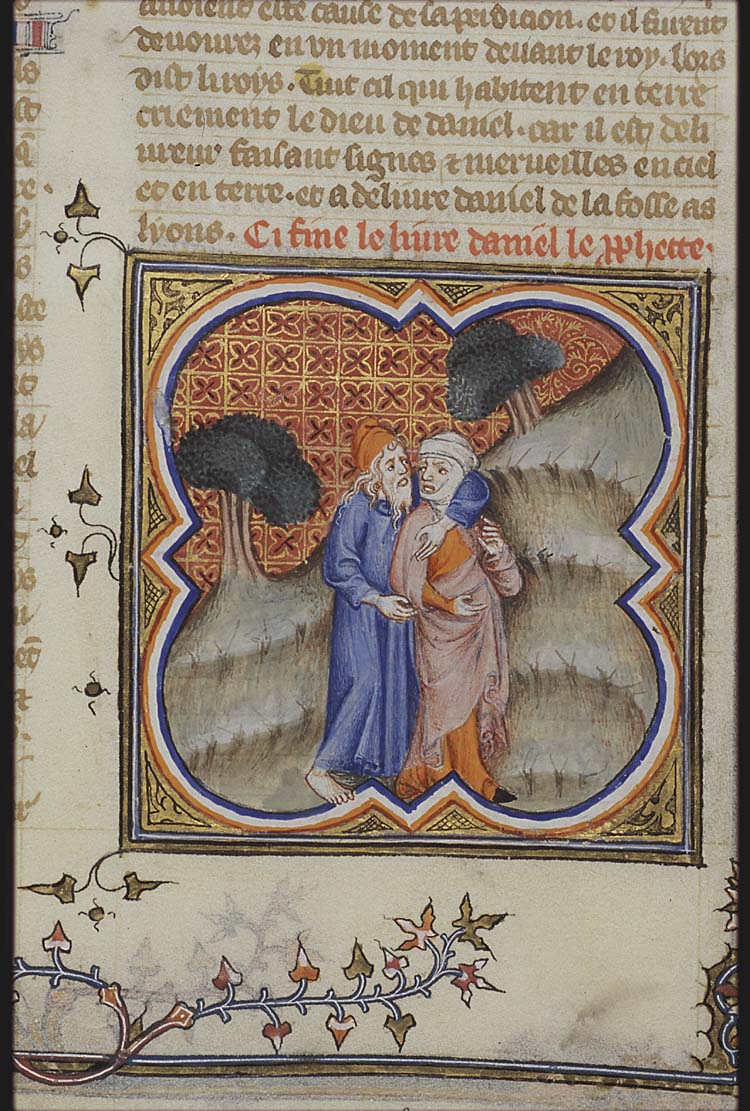
The two of them go on to have children and to name them all kinds of prophetic names (“not pitied,” and “not my people” among them). In case this doesn’t tip you off that it’s a STORY and not a reality, I have good word from real Biblical scholars that “Gomer” is in no ways a woman’s name. It’s a man’s name, and “she” stands here for the nation of Israel (in the same way that her children do).
2:2-3
Plead with your mother, plead--
for she is not my wife,
and I am not her husband--
that she put away her whoring from her face,
and her adultery from between her breasts,
or I will strip her naked
and expose her as in the day she was born,
and make her like a wilderness,
and turn her into a parched land,
and kill her with thirst.
2:5b-6.
For she said, “I will go after my lovers;
they give me my bread and my water,
my wool and my flax, my oil and my drink.”
Therefore I will hedge up her way with thorns;
and I will build a wall against her,
so that she cannot find her paths.
The plot thickens. “She” is unfaithful. She loves the “lovers” (or foreign trading partners) who provide her with food. God proposes some wilderness solutions, to the point of starving her in the desert. These are interesting. They have real connotations of real economic situations – are the people of Israel remembering the God who fed them manna in the wilderness, or are they relying on the deceptive abundance of other kings?
No matter how we take the metaphor, it all looks like a nice case for the therapeutic values of violence. The [prophet’s wife / God’s people] is unfaithful to [the prophet/God], and so [the prophet / God] remedies the solution by making her suffer until she repents. Someone could try to preach it straight up: we are bad, so God will make us suffer until we repent. I’ll take that back. People DO preach that. Preachers legitimate suffering and violence all over the place. They call this a story of unconditional love, and say that the line “kill her with thirst” is spoken in love. They say that the sinful person must be loved back into obedience, through violent “tough love” and plenty of suffering.
You cannot preach this story without legitimating violence. So we must preach against it. We must tell people that this is horrific. That’s one of the problem with the detached, ungrounded way we read Scripture. We don’t even realize when it’s terrible, and we accidentally swallow a legitimation of violence. We read it all in “stained glass language” and couldn’t possibly hear it as sarcastic, or biting, or ironic. We’re blind to the harsher aspects of the text – and so we unwittingly accept the unacceptable.
Prophets speak from a place of desperation and urgency. The stakes are so high that they try to scare people into doing what is right. Sometimes this works. But even if it does, when it has costs as high as this we must not read such prophecy as sacred. It is indeed the story of God’s people struggling together with God and God’s prophets – but God is not the abuser, and violence is never okay.
Sunday, February 6, 2011
Inclusive language: including "Lord."
We work very hard in the PC(USA) to make sure we use inclusive language for people (i.e. not gender-specific so that women don't feel left out) and expansive language for God (i.e. more than just "King" and "Lord" and other such patriarchal labels). We work very hard at Montclair Presbyterian to keep God in a gender-neutral space, although you could accuse us of just being allergic to tradition.
This week we did some spirituals and some other songs that used a lot of "Lord" language. It was occasioned by wanting to include my bassfriend in celebration, and Isaiah Jones' lovely communion liturgy setting. I did some editing of the songs ahead, but although you can easily substitute "God" in for "Lord" in prose, that gets iffy when you get to particular phrases like "Lord our God" which need to have three syllables and a certain musical rhythm. In total syllabic frustration I gave up the efforts at lyrical transposition, and we started talking - at staff meeting - about how (and whether) we could reclaim a positive use for the word "Lord."
After lots of groupthink and collaboration, we ended up printing this in the bulletin:
“Inclusive language is not a fad. It is not this year’s ‘cause,’ to be soon replaced by another. The growing use of inclusive language is the result of serious commitment on the part of many people to use words more responsibly, to speak more precisely, and to communicate more truthfully and sensitively.” (From “More Than Words” by Schaffran and Kozak)
We have changed the words of some of the music in our liturgy this morning to reflect our commitment to inclusive language. The word “Lord” in its traditional use is exclusive and patriarchal. When we use it, we do not use it in the same manner. When we use the word “Lord” in a description of God, we are using it ironically to bring to mind and heart the God who would become incarnate to bring us to wholeness. Our “Lord” -- our “boss” or “master” or even our “king” should we choose to say it – our “Lord” is the one who voluntarily gave up all forms of domination and power, who became the weakest of the weak, and whose greatest power is love. We do not give this respect to anyone who coerces it or demands it; we only give it to the one who subverts and transforms the very idea of power, and who gently loves us into our own strength and empowerment.
What do you think? Does that work? Are you comfortable with applying the word "Lord" to God, despite its connotations? And if so - how do you think of it?
This week we did some spirituals and some other songs that used a lot of "Lord" language. It was occasioned by wanting to include my bassfriend in celebration, and Isaiah Jones' lovely communion liturgy setting. I did some editing of the songs ahead, but although you can easily substitute "God" in for "Lord" in prose, that gets iffy when you get to particular phrases like "Lord our God" which need to have three syllables and a certain musical rhythm. In total syllabic frustration I gave up the efforts at lyrical transposition, and we started talking - at staff meeting - about how (and whether) we could reclaim a positive use for the word "Lord."
After lots of groupthink and collaboration, we ended up printing this in the bulletin:
“Inclusive language is not a fad. It is not this year’s ‘cause,’ to be soon replaced by another. The growing use of inclusive language is the result of serious commitment on the part of many people to use words more responsibly, to speak more precisely, and to communicate more truthfully and sensitively.” (From “More Than Words” by Schaffran and Kozak)
We have changed the words of some of the music in our liturgy this morning to reflect our commitment to inclusive language. The word “Lord” in its traditional use is exclusive and patriarchal. When we use it, we do not use it in the same manner. When we use the word “Lord” in a description of God, we are using it ironically to bring to mind and heart the God who would become incarnate to bring us to wholeness. Our “Lord” -- our “boss” or “master” or even our “king” should we choose to say it – our “Lord” is the one who voluntarily gave up all forms of domination and power, who became the weakest of the weak, and whose greatest power is love. We do not give this respect to anyone who coerces it or demands it; we only give it to the one who subverts and transforms the very idea of power, and who gently loves us into our own strength and empowerment.
What do you think? Does that work? Are you comfortable with applying the word "Lord" to God, despite its connotations? And if so - how do you think of it?
Monday, December 27, 2010
I wrote this
Meditation for Dec 27th, SFTS Devotional
Today’s passage: Proverbs 8:22-30
This passage speaks of a personified wisdom – Sophia. The Hebrew Hochmah and Greek Sophia are both feminine nouns and so have been understood as a glimpse into the feminine aspects of God. The Hebrew understanding of Sophia includes the kind of wisdom that Solomon was reputed to have, with insight and understanding of complex situations, but also includes skills and abilities. Sophia was with the carpenters, weavers, and other workers who constructed the tabernacle. She indwelled them to such degree that they were said to have “the spirit of God.” (Ex 31:6). Her grace-filled gifts are given not only to the mind, but to the hands as well. She is, above all, creative.
We can understand this Sophia as God’s first creation, made not begotten, but we can also see her as a female manifestation of God and of Christ. She is “the first of God’s acts of long ago,” just as Christ is “the Word, in the beginning with God” (John 1:2). She is a co-worker in creation, a “master worker,” similar to the Word through whom “all things came into being” (John 1:3). Paul calls Christ “the wisdom of God” – God’s Sophia (I Cor 1:24).
As we continue to celebrate his marvelous coming into the world, let us seek to be in touch with Christ, the wisdom of God.
The one who makes fools out of the worldly wise;
The one who is understood by fools, women, shepherds, pregnant teens, tax collectors... and dismissed by many others;
The one who came to her own, and her own people did not accept her;
The one who has been “daily God’s delight,” on whom God’s favor rests, descending like a dove;
The one who has seen the creation of all things, who creates, who recreates, who allows us to be recreated.
All these things, wrapped tightly together in story-cloth, laid in the straw he created – all these things made real in one tiny baby.
God – Sophia – Christ.
Be in our hearts and minds and hands today.
Today’s passage: Proverbs 8:22-30
This passage speaks of a personified wisdom – Sophia. The Hebrew Hochmah and Greek Sophia are both feminine nouns and so have been understood as a glimpse into the feminine aspects of God. The Hebrew understanding of Sophia includes the kind of wisdom that Solomon was reputed to have, with insight and understanding of complex situations, but also includes skills and abilities. Sophia was with the carpenters, weavers, and other workers who constructed the tabernacle. She indwelled them to such degree that they were said to have “the spirit of God.” (Ex 31:6). Her grace-filled gifts are given not only to the mind, but to the hands as well. She is, above all, creative.
We can understand this Sophia as God’s first creation, made not begotten, but we can also see her as a female manifestation of God and of Christ. She is “the first of God’s acts of long ago,” just as Christ is “the Word, in the beginning with God” (John 1:2). She is a co-worker in creation, a “master worker,” similar to the Word through whom “all things came into being” (John 1:3). Paul calls Christ “the wisdom of God” – God’s Sophia (I Cor 1:24).
As we continue to celebrate his marvelous coming into the world, let us seek to be in touch with Christ, the wisdom of God.
The one who makes fools out of the worldly wise;
The one who is understood by fools, women, shepherds, pregnant teens, tax collectors... and dismissed by many others;
The one who came to her own, and her own people did not accept her;
The one who has been “daily God’s delight,” on whom God’s favor rests, descending like a dove;
The one who has seen the creation of all things, who creates, who recreates, who allows us to be recreated.
All these things, wrapped tightly together in story-cloth, laid in the straw he created – all these things made real in one tiny baby.
God – Sophia – Christ.
Be in our hearts and minds and hands today.
Sunday, October 11, 2009
Sermon - male and female, wolves and lambs
Galatians 3:19-29
You are all sons and daughters of God through faith in Christ Jesus, for all of you who were baptized into Christ have clothed yourselves with Christ. There is no longer Jew or Greek, no longer slave or free, no longer male and female, for you are all one in Christ Jesus. If you belong to Christ, then you are Abraham's offspring, and heirs according to the promise.
What beautiful words! Everyone who has been baptized into Christ is clothed with Christ, covered with Christ. There are no more distinctions. We are all one. What beautiful words! They sound like poetry… and in fact it is very likely that these words were a poem that people were already familiar with. It is probably the charge that they were given after they were baptized. Picture a crowd of people standing there, newly clothed in white robes, dripping all over the floor, receiving their charge: and an elder of the congregation says to them: now that you have been baptized, you are the sons and the daughters of God. You have clothed yourselves with Christ. You no longer carry the marks of “jew,” “greek,” “african,” “asian,” “free citizen,” “slave,” “slaveowner,” “servant,” “male person,” “female person.” All your personhood has been wrapped in the white robe you now wear. A few hours ago you were all these things – you had rankings and proper positions – someone was superior, and someone was subordinate. YOU were a female jewish citizen, and he a male greek slave – and from now on those things are No Longer True. YOU ARE, as of this moment, all sons and daughters of God through faith in Jesus Christ. There are no more ranks separating you. And this is not a future prediction or wishful thinking. It is true now. It is your new life.
So they said, when they baptized new Christians. So Paul said, to remind the Galatians of their status before God. And so we say. We still say some of the same things when we baptize people. We still read this verse quite often. But do we live it out? Do we live without ranking one another differently? What do you think?
No… as for “no longer Jew or Greek…” well, this is about race. And all races now have legal equality in the US, in terms of civil rights, which is great, but we still separate ourselves from one another. You might not see it here in Wallowa county, but someone once said that the single time when America is the most segregated by race is Sunday morning. In major cities there are black churches and white churches right across the street from one another… yes, even Presbyterian churches.
As for “no longer slave or free,” well, we settled the slavery question in this country many years ago, but even though both sides quoted from the Bible, in the end our Civil War was settled by military right more than by unalloyed ideals. And around the world today there are still men, women, and especially children held in slavery, and there are churches that look the other way and allow their members to participate in this crime.
And as for “no more male and female,” church is actually one of the places where people are MOST likely to be told that men and women ought to occupy different places in society, often arguing that men should work and govern while women raise families and teach children.
Well, maybe we don’t live that out that great ideal to our fullest potential. Let me tell you, though, instead of feeling bad that we don’t live up to our ideals, we can take the easy way out. It’s easier to assume that Paul didn’t mean what he said here. We are in good company – for much of history, Christians have assumed that Paul did not mean it to be taken LITERALLY. A few quotes from Biblical scholars: one: “the passage has nothing to do with the abolition of slavery.” (Ernest de Witt Burton, 1920) another: “it is impossible for Paul to have in mind an emancipation of slaves and women,” and this is spoken “purely religiously,” (Albrecht Oepke, 1937). And another: “all metaphysical, historical, and natural distinctions stemming from the old eon are abolished sacramentally i.e. in a hidden but real way.” (Heinrich Schleier, 1971) (all three quoted in: Hans Dieter Betz, Galatians. Fortress Press, Philadelphia, 1979, p 189).
We have invented many categories in order to get around the radical statement of this verse. And it seems that it was even hard for Paul himself to stick with this. It works pretty well in the letter to the Galatians, where he’s dealing mainly with arguments about Jews and Greeks – racial and cultural unity. But in his letter to the Corinthians he had to deal with more specific situations between men and women, and he backed down a little from just saying “you are all one.” In the letter to Philemon he had to deal with a runaway slave, and he did not say “there is no more slave or free…” instead he delicately dealt with personalities and mentioned the slaveowner’s personal debt of love which he owed to Paul. It is hard to stick to the message of “you are all sons and daughters of God in Christ Jesus” when the circumstances of life plainly tell us that some people still ARE women, and some people still DO own slaves. It is a very hard message to proclaim.
But even though many people have taken the easy way out, finding some way to explain this away, today I want us to take the challenge and assume – at least for now – that when Paul wrote this, he meant what he said. We all pick and choose through the Bible, because not EVERYTHING can be the MOST important message. And many people have found ways in which to explain that this particular passage was not Paul’s most important message. At the end of the day you can feel free to disagree with me. But for now let’s “go there” – let’s talk about what this would mean if it really were a central point of the Christian message.
When he wrote this quote, Paul was in the middle of an argument about law and faith. He explains the difference between law and faith in a metaphor of growing up. When we were young we were under the supervision of a “disciplinarian,” or a “guardian,” or a “tutor.” In Greek society this was basically a one-on-one babysitter, a slave who would escort a rich little boy to his classes, his music lessons, his soccer practice – just kidding – and teach him good manners on the way. A young boy could be a very important little man, destined for great riches and privileges, but until he came of age, he was completely controlled by his guardian – this babysitter. Paul says the law was our guardian until the right time came – until we were “of age,” metaphorically speaking, and were given the inheritance through faith in Christ. The law – from the ten commandments all through the nits and picks of what to eat when and how – the law supervised us, hedging us in and telling us what to do and when. It protected us because we were too immature to take responsibility for our own actions.
And when faith in Christ came, it brought us freedom. And now we are free people – Adults – responsible people – no longer needing to be babysat. Or at least… we’re supposed to act like adults. My professor at seminary – a little bit hard of hearing – really loved this verse and he would lean over the podium at us practically shouting “we should be sick and tired of being called the Children of God whenever we go to church! I’m not a child of God, I am an ADULT of God and I’m ready to be treated like one!” I heard that repeated several times during his lectures.
So, that much to say, we should be glad to have the babysitter off our backs. We should be happy that we are now adult sons and daughters of God; that we have graduated from the elementary school of the law. We should be rejoicing to know that we are free and mature and responsible people, who can make ethical decisions even without a law code telling us what to do when and how.
But did you ever meet an adult who still wanted to be babysat? Someone who had been coddled and spoiled in their childhood, and wanted childhood never to end? Someone who never learned a few basic life skills and is always looking for a friend that he or she can leech off of and avoid facing reality…? Ever met one?
I think if we look at the history of Christianity, we’ll see a lot of examples where we Christians look like that adult. Like the guy who picks a girlfriend based on how well she can cook and clean… (cuz he can’t) or the girl who keeps running back to live at home because… well… daddy always fixes her car when it breaks. Like we’ve graduated – we’ve been given a big party and a new car – and we set off into the big wide world to live a life of FREEDOM and excitement – and we just get lost in the wilderness of that freedom. It’s scary. Somebody! Please! Come tell me what to do.
I think this is why we as Christians try to get away from the message of equality and freedom – from that message that we are all one and that there are no more differences between us – and that’s why we try to add some rules back on – because that’s really hard to live in. It is wild – it isn’t tame. It produces tension. Think about that tension.
If a slave and a master look each other in the eye and both really believe that there is no difference between them because of Christ – then they are going to have to do some reconfiguration aren’t they? It’s not going to be "boy! Do this!" And "yessir, yessir." They have to figure it out differently.
If a Jew and a Gentile look each other in the eye and both really believe that there is no difference between them because of Christ – well, that will be hard, because the Jewish person was used to being the expert on religion, and this Gentile was just supposed to look on admiringly from the sidelines. Now they don’t know who should stand where – they will have to negotiate.
If a man and a woman look each other in the eye and both really believe that there is no longer any difference between them because of Christ – this is going to be a difficult one. Life ran smoothly when the wife was silent and the husband ran everything. There was nothing to disagree about. It was never “your way vs my way” – it was always “his way.” But now that their guidelines are only “respect” and “love” – wow, what a mess. It really blows your mind to consider someone else without using any ranks of superiority and inferiority.
Sometimes, if we are taken away from our ways of judging and ranking people, we make up new systems and ranks. We want to lean on law – it is our crutch – our babysitter. Christians are really great at making up new rules. For example, maybe we can get away from the judgmentalism of thinking rich people are “better than” poor people – but then sometimes we invent a whole new judgmentalism. A friend told me that among Korean pastors there is a lot of judgment about what kind of car you drive. You probably would expect that a church would want their pastor to drive a nice car – but oh no, they’re Christian now, so actually it’s backwards. You will be approved of if you drive a nasty old beater, and looked down upon if you buy a newer, safer car. This is, indeed, somewhat in line with how Jesus told us to give away our money to the poor… but it is lawmaking all the same. Whenever we make laws we are going back to that babysitter, with its rules and rankings. We can’t seem to live in freedom for very long without putting up SOME standard of who we expect to be superior and inferior to one another.
So what would life look like if we really were able to accept one another as the sons and daughters of God – and only that? With no qualifications, no ranking systems? If we really matured and took adult responsibility as Christians, and lived as ADULTS of God without looking to be babysat? What would it look like?
Well we know it would be a hard task. But if we really did it, our attitudes would change. No one would assume that they knew someone’s character by looking at their color, their gender, their clothing, their car, or where they lived. We would have to respect each person individually… whether you drove a beat up pickup or a prius, whether you came from an intellectual family in California or from generations upon generations of ranchers, whether you lived in Wallowa River House (a home for mentally ill and disabled folks) or in a mansion out in the hills. There would be no built-in judgment, no looking down on anyone as less than, and no looking up to people as if they were better than us.
But at the same time, I don’t think we Christians would ever look like a group of clones. We could get rid of our positions and ranks without giving up our natural, God-given differences. Everyone is unique, from the color of their skin to the culture they grew up in. These are not erased. If they were…. Paul would have said it a little differently. He might have said “there is no more Greek, or female, or slave, for you are all one like me, the superior form of being, a free male Jew.” It sounds funny, but there ARE some rare early Christian writers who went in that direction, and suggested that really good women could be considered on par with men. That God would miraculously turn them into men so they could go to heaven. No, that is not right. God created us male and female, and saw us and said that we were very good. Paul is not dismissing the fact that we are all different and unique.
What Paul dismisses is this business of either-or; one or the other; there will be no more choosing one and dismissing the other. You don’t have to identify yourself as one or the other. In fact Paul, man though he is, goes on to use some very feminine words to describe his own love for the Galatians: Listen to this!
“My little children, for whom I am again in the pain of childbirth until Christ is formed in you!” 4:19
And regarding slavery, he says that we should stand firm and not be slaves to anything of this world. BUT he also says “through love become slaves to one another.” 5:13
When Paul, a free man, begins talking like a mother and like a slave, we know there is more to this than just erasing social boundaries. He is declaring that there is no shame in being ANY thing at all – no shame in being a woman, no shame in being a slave, no shame in being a free man who voluntarily chooses to love like a mother and serve like a slave.
The only thing that matters is that we belong to Christ. If we are sons and daughters of God, then Christ is our brother. We are all in a new family together, and Paul explains to us how this is going to work… how we are going to put aside notions of rank and privilege, and instead we will look at the image of God in one another.
I want to end by bringing another passage in. My Ugandan friend David Ofumbi preached on Isaiah 11 and it really stuck with me.
“The wolf shall live with the lamb,
the leopard shall lie down with the kid,
the calf and the lion and the fatling together,
and a little child shall lead them.”
David asked how we are going to get from here to there? Clearly, only by the grace of God. But David pointed out a very true point: that it is completely unnatural for a wolf and a lamb to lie down together. And to get to the point where they can lie down together, they are both going to have to overcome their natural instincts. It is natural for a lamb to fear wolves, and natural for a wolf to hunt lambs. The lamb is going to have to become brave, and the wolf is going to have to become gentle. Both have a job to do, to bring about this amazing vision of peace on earth. And they have to trust one another. If the lamb comes bravely up to a wolf that is not gentle… then she isn’t brave, she’s foolish. If a very gentle wolf tries to lie down with a lamb that does not trust him… the lamb will run away.
I think this is also an appropriate image for what Paul is asking for here. In order to live as free adults in the family of God, we all have to overcome our natural instincts. “What comes naturally” isn’t good enough, because what comes naturally is judgment, and discrimination, and forcing people to fall into lines we draw for them. It is comfortable, it is natural, but our human nature is full of sin. To live out the truth Paul insisted upon, we all have to overcome our own nature and take on Christ’s nature. Violent people need to become gentle. Fearful people need to become courageous. Men need to learn to sacrifice like women, and women need to learn to stand up like men. Slaves need to refuse to submit to slavery, and we all need to become slaves of love, for one anothers’ sake in Christ. We can hardly do this on our own power. It is not natural – it’s barely possible – but with God all things are possible.
Go forth today and get beyond what’s natural. Look someone in the eye and know that in Christ there are no ranks separating us from one another. Act as if there were no shame in being ANYTHING that God has created you to be. Look only at the image of God in other people. Don’t just think this way – act this way. Put away all the childish rules of who is better than someone else, and treat everyone as they deserve as a son or daughter of God. And by doing so, may we truly become one body in Christ. Amen.
You are all sons and daughters of God through faith in Christ Jesus, for all of you who were baptized into Christ have clothed yourselves with Christ. There is no longer Jew or Greek, no longer slave or free, no longer male and female, for you are all one in Christ Jesus. If you belong to Christ, then you are Abraham's offspring, and heirs according to the promise.
What beautiful words! Everyone who has been baptized into Christ is clothed with Christ, covered with Christ. There are no more distinctions. We are all one. What beautiful words! They sound like poetry… and in fact it is very likely that these words were a poem that people were already familiar with. It is probably the charge that they were given after they were baptized. Picture a crowd of people standing there, newly clothed in white robes, dripping all over the floor, receiving their charge: and an elder of the congregation says to them: now that you have been baptized, you are the sons and the daughters of God. You have clothed yourselves with Christ. You no longer carry the marks of “jew,” “greek,” “african,” “asian,” “free citizen,” “slave,” “slaveowner,” “servant,” “male person,” “female person.” All your personhood has been wrapped in the white robe you now wear. A few hours ago you were all these things – you had rankings and proper positions – someone was superior, and someone was subordinate. YOU were a female jewish citizen, and he a male greek slave – and from now on those things are No Longer True. YOU ARE, as of this moment, all sons and daughters of God through faith in Jesus Christ. There are no more ranks separating you. And this is not a future prediction or wishful thinking. It is true now. It is your new life.
So they said, when they baptized new Christians. So Paul said, to remind the Galatians of their status before God. And so we say. We still say some of the same things when we baptize people. We still read this verse quite often. But do we live it out? Do we live without ranking one another differently? What do you think?
No… as for “no longer Jew or Greek…” well, this is about race. And all races now have legal equality in the US, in terms of civil rights, which is great, but we still separate ourselves from one another. You might not see it here in Wallowa county, but someone once said that the single time when America is the most segregated by race is Sunday morning. In major cities there are black churches and white churches right across the street from one another… yes, even Presbyterian churches.
As for “no longer slave or free,” well, we settled the slavery question in this country many years ago, but even though both sides quoted from the Bible, in the end our Civil War was settled by military right more than by unalloyed ideals. And around the world today there are still men, women, and especially children held in slavery, and there are churches that look the other way and allow their members to participate in this crime.
And as for “no more male and female,” church is actually one of the places where people are MOST likely to be told that men and women ought to occupy different places in society, often arguing that men should work and govern while women raise families and teach children.
Well, maybe we don’t live that out that great ideal to our fullest potential. Let me tell you, though, instead of feeling bad that we don’t live up to our ideals, we can take the easy way out. It’s easier to assume that Paul didn’t mean what he said here. We are in good company – for much of history, Christians have assumed that Paul did not mean it to be taken LITERALLY. A few quotes from Biblical scholars: one: “the passage has nothing to do with the abolition of slavery.” (Ernest de Witt Burton, 1920) another: “it is impossible for Paul to have in mind an emancipation of slaves and women,” and this is spoken “purely religiously,” (Albrecht Oepke, 1937). And another: “all metaphysical, historical, and natural distinctions stemming from the old eon are abolished sacramentally i.e. in a hidden but real way.” (Heinrich Schleier, 1971) (all three quoted in: Hans Dieter Betz, Galatians. Fortress Press, Philadelphia, 1979, p 189).
We have invented many categories in order to get around the radical statement of this verse. And it seems that it was even hard for Paul himself to stick with this. It works pretty well in the letter to the Galatians, where he’s dealing mainly with arguments about Jews and Greeks – racial and cultural unity. But in his letter to the Corinthians he had to deal with more specific situations between men and women, and he backed down a little from just saying “you are all one.” In the letter to Philemon he had to deal with a runaway slave, and he did not say “there is no more slave or free…” instead he delicately dealt with personalities and mentioned the slaveowner’s personal debt of love which he owed to Paul. It is hard to stick to the message of “you are all sons and daughters of God in Christ Jesus” when the circumstances of life plainly tell us that some people still ARE women, and some people still DO own slaves. It is a very hard message to proclaim.
But even though many people have taken the easy way out, finding some way to explain this away, today I want us to take the challenge and assume – at least for now – that when Paul wrote this, he meant what he said. We all pick and choose through the Bible, because not EVERYTHING can be the MOST important message. And many people have found ways in which to explain that this particular passage was not Paul’s most important message. At the end of the day you can feel free to disagree with me. But for now let’s “go there” – let’s talk about what this would mean if it really were a central point of the Christian message.
When he wrote this quote, Paul was in the middle of an argument about law and faith. He explains the difference between law and faith in a metaphor of growing up. When we were young we were under the supervision of a “disciplinarian,” or a “guardian,” or a “tutor.” In Greek society this was basically a one-on-one babysitter, a slave who would escort a rich little boy to his classes, his music lessons, his soccer practice – just kidding – and teach him good manners on the way. A young boy could be a very important little man, destined for great riches and privileges, but until he came of age, he was completely controlled by his guardian – this babysitter. Paul says the law was our guardian until the right time came – until we were “of age,” metaphorically speaking, and were given the inheritance through faith in Christ. The law – from the ten commandments all through the nits and picks of what to eat when and how – the law supervised us, hedging us in and telling us what to do and when. It protected us because we were too immature to take responsibility for our own actions.
And when faith in Christ came, it brought us freedom. And now we are free people – Adults – responsible people – no longer needing to be babysat. Or at least… we’re supposed to act like adults. My professor at seminary – a little bit hard of hearing – really loved this verse and he would lean over the podium at us practically shouting “we should be sick and tired of being called the Children of God whenever we go to church! I’m not a child of God, I am an ADULT of God and I’m ready to be treated like one!” I heard that repeated several times during his lectures.
So, that much to say, we should be glad to have the babysitter off our backs. We should be happy that we are now adult sons and daughters of God; that we have graduated from the elementary school of the law. We should be rejoicing to know that we are free and mature and responsible people, who can make ethical decisions even without a law code telling us what to do when and how.
But did you ever meet an adult who still wanted to be babysat? Someone who had been coddled and spoiled in their childhood, and wanted childhood never to end? Someone who never learned a few basic life skills and is always looking for a friend that he or she can leech off of and avoid facing reality…? Ever met one?
I think if we look at the history of Christianity, we’ll see a lot of examples where we Christians look like that adult. Like the guy who picks a girlfriend based on how well she can cook and clean… (cuz he can’t) or the girl who keeps running back to live at home because… well… daddy always fixes her car when it breaks. Like we’ve graduated – we’ve been given a big party and a new car – and we set off into the big wide world to live a life of FREEDOM and excitement – and we just get lost in the wilderness of that freedom. It’s scary. Somebody! Please! Come tell me what to do.
I think this is why we as Christians try to get away from the message of equality and freedom – from that message that we are all one and that there are no more differences between us – and that’s why we try to add some rules back on – because that’s really hard to live in. It is wild – it isn’t tame. It produces tension. Think about that tension.
If a slave and a master look each other in the eye and both really believe that there is no difference between them because of Christ – then they are going to have to do some reconfiguration aren’t they? It’s not going to be "boy! Do this!" And "yessir, yessir." They have to figure it out differently.
If a Jew and a Gentile look each other in the eye and both really believe that there is no difference between them because of Christ – well, that will be hard, because the Jewish person was used to being the expert on religion, and this Gentile was just supposed to look on admiringly from the sidelines. Now they don’t know who should stand where – they will have to negotiate.
If a man and a woman look each other in the eye and both really believe that there is no longer any difference between them because of Christ – this is going to be a difficult one. Life ran smoothly when the wife was silent and the husband ran everything. There was nothing to disagree about. It was never “your way vs my way” – it was always “his way.” But now that their guidelines are only “respect” and “love” – wow, what a mess. It really blows your mind to consider someone else without using any ranks of superiority and inferiority.
Sometimes, if we are taken away from our ways of judging and ranking people, we make up new systems and ranks. We want to lean on law – it is our crutch – our babysitter. Christians are really great at making up new rules. For example, maybe we can get away from the judgmentalism of thinking rich people are “better than” poor people – but then sometimes we invent a whole new judgmentalism. A friend told me that among Korean pastors there is a lot of judgment about what kind of car you drive. You probably would expect that a church would want their pastor to drive a nice car – but oh no, they’re Christian now, so actually it’s backwards. You will be approved of if you drive a nasty old beater, and looked down upon if you buy a newer, safer car. This is, indeed, somewhat in line with how Jesus told us to give away our money to the poor… but it is lawmaking all the same. Whenever we make laws we are going back to that babysitter, with its rules and rankings. We can’t seem to live in freedom for very long without putting up SOME standard of who we expect to be superior and inferior to one another.
So what would life look like if we really were able to accept one another as the sons and daughters of God – and only that? With no qualifications, no ranking systems? If we really matured and took adult responsibility as Christians, and lived as ADULTS of God without looking to be babysat? What would it look like?
Well we know it would be a hard task. But if we really did it, our attitudes would change. No one would assume that they knew someone’s character by looking at their color, their gender, their clothing, their car, or where they lived. We would have to respect each person individually… whether you drove a beat up pickup or a prius, whether you came from an intellectual family in California or from generations upon generations of ranchers, whether you lived in Wallowa River House (a home for mentally ill and disabled folks) or in a mansion out in the hills. There would be no built-in judgment, no looking down on anyone as less than, and no looking up to people as if they were better than us.
But at the same time, I don’t think we Christians would ever look like a group of clones. We could get rid of our positions and ranks without giving up our natural, God-given differences. Everyone is unique, from the color of their skin to the culture they grew up in. These are not erased. If they were…. Paul would have said it a little differently. He might have said “there is no more Greek, or female, or slave, for you are all one like me, the superior form of being, a free male Jew.” It sounds funny, but there ARE some rare early Christian writers who went in that direction, and suggested that really good women could be considered on par with men. That God would miraculously turn them into men so they could go to heaven. No, that is not right. God created us male and female, and saw us and said that we were very good. Paul is not dismissing the fact that we are all different and unique.
What Paul dismisses is this business of either-or; one or the other; there will be no more choosing one and dismissing the other. You don’t have to identify yourself as one or the other. In fact Paul, man though he is, goes on to use some very feminine words to describe his own love for the Galatians: Listen to this!
“My little children, for whom I am again in the pain of childbirth until Christ is formed in you!” 4:19
And regarding slavery, he says that we should stand firm and not be slaves to anything of this world. BUT he also says “through love become slaves to one another.” 5:13
When Paul, a free man, begins talking like a mother and like a slave, we know there is more to this than just erasing social boundaries. He is declaring that there is no shame in being ANY thing at all – no shame in being a woman, no shame in being a slave, no shame in being a free man who voluntarily chooses to love like a mother and serve like a slave.
The only thing that matters is that we belong to Christ. If we are sons and daughters of God, then Christ is our brother. We are all in a new family together, and Paul explains to us how this is going to work… how we are going to put aside notions of rank and privilege, and instead we will look at the image of God in one another.
I want to end by bringing another passage in. My Ugandan friend David Ofumbi preached on Isaiah 11 and it really stuck with me.
“The wolf shall live with the lamb,
the leopard shall lie down with the kid,
the calf and the lion and the fatling together,
and a little child shall lead them.”
David asked how we are going to get from here to there? Clearly, only by the grace of God. But David pointed out a very true point: that it is completely unnatural for a wolf and a lamb to lie down together. And to get to the point where they can lie down together, they are both going to have to overcome their natural instincts. It is natural for a lamb to fear wolves, and natural for a wolf to hunt lambs. The lamb is going to have to become brave, and the wolf is going to have to become gentle. Both have a job to do, to bring about this amazing vision of peace on earth. And they have to trust one another. If the lamb comes bravely up to a wolf that is not gentle… then she isn’t brave, she’s foolish. If a very gentle wolf tries to lie down with a lamb that does not trust him… the lamb will run away.
I think this is also an appropriate image for what Paul is asking for here. In order to live as free adults in the family of God, we all have to overcome our natural instincts. “What comes naturally” isn’t good enough, because what comes naturally is judgment, and discrimination, and forcing people to fall into lines we draw for them. It is comfortable, it is natural, but our human nature is full of sin. To live out the truth Paul insisted upon, we all have to overcome our own nature and take on Christ’s nature. Violent people need to become gentle. Fearful people need to become courageous. Men need to learn to sacrifice like women, and women need to learn to stand up like men. Slaves need to refuse to submit to slavery, and we all need to become slaves of love, for one anothers’ sake in Christ. We can hardly do this on our own power. It is not natural – it’s barely possible – but with God all things are possible.
Go forth today and get beyond what’s natural. Look someone in the eye and know that in Christ there are no ranks separating us from one another. Act as if there were no shame in being ANYTHING that God has created you to be. Look only at the image of God in other people. Don’t just think this way – act this way. Put away all the childish rules of who is better than someone else, and treat everyone as they deserve as a son or daughter of God. And by doing so, may we truly become one body in Christ. Amen.
Sunday, September 27, 2009
Neither male nor female
I owe the blogosphere a feminist entry, especially as I dared to list "feminism" as one of my interests on networkedblogs, and as I have been mulling over it (hard) all summer.
Well I went to a Eastern-Oregon-wide Presbyterian Women meeting yesterday, reluctantly. I dragged my feet because it was, after all, 130 miles away, meaning we left before 7 AM, and I already had overworked all week long. A sabbath day and a nice nap later, however, I can say I am very happy I went. PW is really an awesome organization, with a devotional/Bible study element nicely balanced against a huge, unified, and powerful mission element. Eastern Oregon is one of the more active presbyteries in PW; although there were only about 25 people there, they represented a vibrant and active collection of women serving their local communities and the world. The S ynod moderator was in attendance as well, all the way from San Jose!
Madam Moderator asked me to lead the assembly in a litany based on Galatians 3 and I gladly assented. It is a passage near and dear to my heart these days:
"all of you who were baptized into Christ have clothed yourselves with Christ. There is neither Jew nor Greek, slave nor free, male nor female, for you are all one in Christ Jesus."
Everyone, I think, would agree that this is one of the more poetic and beautiful lines Paul wrote. But I am grateful to be the company of people who believe that it is also one of the more central lines of his theology, ecclesiology, and missiology. I think this is Paul's central society-shaking message, one that scares us so much that it has scarcely been followed. There are, of course, other contenders for central position, and some, in the deutero-Pauline set, much less radically egalitarian - a little more along the lines of "keep doing what society tells you to do." The Bible is wide and varied - and whether we admit it or not, each of us chooses the passages which we consider central.
I choose this passage as central because of an exegetical principle, Lectio difficilior potior, "the more difficult reading is the stronger." That is, if there is a complicated or unexpected phrase, we the reader (interpreter - or scribe on an ancient manuscript) are likely to change it to something that makes more sense to us. We are not as likely to make mistakes in the reverse direction -- we are not likely to take a text that makes sense to us, and add a confusing word or phrase. If we have two texts side by side, copies from the same source, and one is easy and one is challenging -- then assume the challenging one is closer to the original source.
It is hard for us to believe and live the truth that Paul proclaims -- that when we are baptized into Christ we lose every other element of "identity" we used to have. We face the world with no labels, no restrictions, no mandates other than to live in Christ (Help, could we have a few rules and guidelines, please?).
It is easy for us to go along with traditional society -- for rich people to keep slaves, for men to rule women, for whites to associate with whites only, for folks of any other color to stick to "their own." It is easier for a wife always to defer and a husband to always rule -- because you always know who is going to give the ultimate answer. But when non-gospel rules and roles are abandoned, and all you have left is your common identity in Christ, you are likely to be at a loss for how to solve disagreements (hint: keep asking wwjd, over and over). It's harder to live that way.
It is easy to add commonly accepted rules and roles to the message of the gospel, to stick "jesus says" before all our favorite platitudinous statements. It is hard to go against the grain. Society tells us not to. Nature (allegedly / in traditional interpretations) tells us not to -- that it is natural for like to associate with like, and that our very bodies argue for the superiority of men and submission of women. We might read Paul as giving us a nice inspirational but ultimately impractical vision of the spiritual (non physical) life in Christ. If so, this is the easy way out.
The harder reality is to be preferred -- that Paul really intended us to take him literally here. That we really ought to discard notions of status, racial and gender superiority, and live against the old nature in the new reality of Christ, where our only clothing is the baptismal robe.
My mom pointed me to a great article and bit of advice: we should "mistrust any interpretation of Scripture that simply confirms our instincts. If it is more natural for a man to be aggressive and a woman to be passive, then a genuine encounter with Christ should challenge a man to become gentle and a woman to become bold.” (Brandon O’Brien, “A Jesus For Real Men” p 4.) The real Calvinist in me comes out -- reminding myself and you that our natural instincts are as flawed as any other part of us, and that human nature is seldom pure. We cannot sanctify the natural social order of things, or baptize human convention (as so many have tried to, even in the Bible).
All this to say I am grateful to belong to a denomination that positively laid this issue to rest years ago, affirming women in ordained ministry, challenging us all to live in the harder reality that goes against the grain and holds to a difficult - humanly, nearly impossible - statement that "we are all one in Christ."
Well I went to a Eastern-Oregon-wide Presbyterian Women meeting yesterday, reluctantly. I dragged my feet because it was, after all, 130 miles away, meaning we left before 7 AM, and I already had overworked all week long. A sabbath day and a nice nap later, however, I can say I am very happy I went. PW is really an awesome organization, with a devotional/Bible study element nicely balanced against a huge, unified, and powerful mission element. Eastern Oregon is one of the more active presbyteries in PW; although there were only about 25 people there, they represented a vibrant and active collection of women serving their local communities and the world. The S
 ynod moderator was in attendance as well, all the way from San Jose!
Madam Moderator asked me to lead the assembly in a litany based on Galatians 3 and I gladly assented. It is a passage near and dear to my heart these days:
"all of you who were baptized into Christ have clothed yourselves with Christ. There is neither Jew nor Greek, slave nor free, male nor female, for you are all one in Christ Jesus."
Everyone, I think, would agree that this is one of the more poetic and beautiful lines Paul wrote. But I am grateful to be the company of people who believe that it is also one of the more central lines of his theology, ecclesiology, and missiology. I think this is Paul's central society-shaking message, one that scares us so much that it has scarcely been followed. There are, of course, other contenders for central position, and some, in the deutero-Pauline set, much less radically egalitarian - a little more along the lines of "keep doing what society tells you to do." The Bible is wide and varied - and whether we admit it or not, each of us chooses the passages which we consider central.
I choose this passage as central because of an exegetical principle, Lectio difficilior potior, "the more difficult reading is the stronger." That is, if there is a complicated or unexpected phrase, we the reader (interpreter - or scribe on an ancient manuscript) are likely to change it to something that makes more sense to us. We are not as likely to make mistakes in the reverse direction -- we are not likely to take a text that makes sense to us, and add a confusing word or phrase. If we have two texts side by side, copies from the same source, and one is easy and one is challenging -- then assume the challenging one is closer to the original source.
It is hard for us to believe and live the truth that Paul proclaims -- that when we are baptized into Christ we lose every other element of "identity" we used to have. We face the world with no labels, no restrictions, no mandates other than to live in Christ (Help, could we have a few rules and guidelines, please?).
It is easy for us to go along with traditional society -- for rich people to keep slaves, for men to rule women, for whites to associate with whites only, for folks of any other color to stick to "their own." It is easier for a wife always to defer and a husband to always rule -- because you always know who is going to give the ultimate answer. But when non-gospel rules and roles are abandoned, and all you have left is your common identity in Christ, you are likely to be at a loss for how to solve disagreements (hint: keep asking wwjd, over and over). It's harder to live that way.
It is easy to add commonly accepted rules and roles to the message of the gospel, to stick "jesus says" before all our favorite platitudinous statements. It is hard to go against the grain. Society tells us not to. Nature (allegedly / in traditional interpretations) tells us not to -- that it is natural for like to associate with like, and that our very bodies argue for the superiority of men and submission of women. We might read Paul as giving us a nice inspirational but ultimately impractical vision of the spiritual (non physical) life in Christ. If so, this is the easy way out.
The harder reality is to be preferred -- that Paul really intended us to take him literally here. That we really ought to discard notions of status, racial and gender superiority, and live against the old nature in the new reality of Christ, where our only clothing is the baptismal robe.
My mom pointed me to a great article and bit of advice: we should "mistrust any interpretation of Scripture that simply confirms our instincts. If it is more natural for a man to be aggressive and a woman to be passive, then a genuine encounter with Christ should challenge a man to become gentle and a woman to become bold.” (Brandon O’Brien, “A Jesus For Real Men” p 4.) The real Calvinist in me comes out -- reminding myself and you that our natural instincts are as flawed as any other part of us, and that human nature is seldom pure. We cannot sanctify the natural social order of things, or baptize human convention (as so many have tried to, even in the Bible).
All this to say I am grateful to belong to a denomination that positively laid this issue to rest years ago, affirming women in ordained ministry, challenging us all to live in the harder reality that goes against the grain and holds to a difficult - humanly, nearly impossible - statement that "we are all one in Christ."
Sunday, May 10, 2009
Sermon -- Mother God
Disclaimer: this is the sort of sermon you want an intern to preach. It shakes things up in a way that the head pastor can't really do. I had many strong positive and strong negative reactions, and apparently I didn't quite spend enough time telling people that by quoting from The Shack I was not endorsing it, and that it's FICTION NOT DOCTRINE. The problem on that is, my worship committee is (by happenchance) quite a bit farther to the left of the rest of the church, and when I asked how they thought such a sermon would go over, they shrugged and said "go for it."
Right. Next time, more careful. But, although I did have negative reactions, there were such strong positive reactions too! I had some full-body hugs from people who aren't really the huggy type.
And my favorite reaction came from an old rancher with a twinkle in his eye:
"welll, we'll let you git away wit' it because yer from New York City..."
Mother God
Isaiah 49:14-21
Although I’ve always been the one to preach without a joke, we’ve got an exception today! Ready for the sermon? Here we go!
So two old friends are visiting with each other. They were close friends in high school and thereafter but they haven’t seen each other for about twenty years now so they have a lot to catch up on. And one is telling the other about some health problems he’d had. He says “I was really pretty badly sick, and those doctors did a tremendous job. But I did get very near death. You know, I was in the dark looking for the light at the end of the tunnel, and all that….”
His friend says “wow! Tell me about it! What did you see?”
And he says “well I got through to the light, and up to heaven, I guess, just for a short while, yknow I thought I was there to stay but I wasn’t. I even got to meet God before I got pulled back to the hospital and came conscious again.”
And his friend is REALLy interested in this now and asks “so tell me! What was THAT like?”
This guy hestitates for a second. “well… it wasn’t quite as I expected… okay, there are a few things about God that surprised me. For one, she’s black.”
How does it feel to be surprised with a different image of God?
Is it confusing? A little bit uncomfortable? Most of us at some point got used to the image of God with a flowing white beard, as he is pictured on the ceiling of the Sistine Chapel. He’s old. He’s white, and male. When I was a child, I thought God was kind of like – grandpa. This worked because my grandfather was a nice person, but he had already died when I was young. So grandpa was in heaven, just like God was in heaven, and both grandpa and God were generally nice, lovable people, with white hair and wrinkles. This is an image that worked well for me.
But what if your grandfather was not so easy to love? What if he was depressive, or violent, and didn’t like children? The image of God as a grandfather that worked so well for me might be a terrifying image to a child who is afraid of their earthly grandfather. The image that works for one person is harmful to another.
We find the same problems when we try calling God our Father, or our Mother, or calling Christ our brother, or our King, or our lover, or our friend. All human titles we can use are tainted by human sin, and failings, and the pains we experience in this life.
I’m wondering how many of you read this book. Can I have a show of hands? (The Shack, by William P Young). For many people this is a deeply meaningful book because it shows us a different image of God. But it’s also very difficult in some ways, and definitely controversial. It is completely surprising.
Just to give you a sketch of what happens in this book, the main character Mack gets an invitation from God to visit a shack where his youngest daughter had been murdered. There he meets the Trinity. There are three people waiting there for him, and he asks which one of them is God and they all say “I am” in unison. Father, Son, and Holy Ghost. Jesus is pretty identifiable - he looks like a middle eastern carpenter. But the Holy Spirit is a small Asian woman who is half-invisible and keeps disappearing. and the Father God is called Papa, but she takes the form of a woman. Mack is completely surprised by this. Listen to just an except of how Papa greets him when he comes:
Mack decided to knock on the door and see what happened, but just as he raised his fist to do so, the door flew open, and he was looking directly into the face of a large beaming African-American woman.
Instinctively he jumped back, but he was too slow. With speed that belied her size, she crossed the distance between them and engulfed him in her arms, lifting him clear off his feet and spinning him around like a little child. And all the while she was shouting his name – “Mackenzie Allen Phillips!”—with the ardor of someone seeing a long-lost and deeply-loved relative. She finally put him back on earth and with her hands on his shoulders, pushed him back as if to get a good look at him.
“Mack, look at you!” she fairly exploded. “Here you are, and so grown up. I have really been looking forward to seeing you face to face. It is so wonderful to have you here with us. My, my, my, how I do love you!” And with that she wrapped herself around him again.
If we encountered God in such a suprising, overpowering, in-your-face kind of way, I bet most of us would do just what Mack did in this book – he stood there, with his jaw gaping wide, while God practically ran circles around him in her excitement to see him. This is a funny image of God. It shakes us up. It’s not what we expect to happen. If we expect God to be majestic, slow, deliberate, and reserved, what are we going to do when God breaks our expectations and our social conventions? If we expect to bow on the floor in front of God and worship him, or maybe kiss his feet, what are we going to do if he picks us up and hugs us?
But God’s love comes to us in many different forms. God will use any method available to get a message through to us, and this is what is ultimately important -- getting across the message of God's love. In the Shack, both the Holy Spirit and the Father God chose to be seen as a woman for Mack because they knew he had had a bad experience with fatherhood – both in that his father treated him cruelly, and in that he felt he was not a “good enough” father to his own children. So since Mack had trouble with fatherhood, God appeared as a woman. It wasn’t a problem for her. She was happy to appear in any way that would help her communicate to Mack with nothing in the way.
This has happened before. It’s not about whether God is male or female, or black and white, or anything like that. It’s about using a new image to really get our attention. There are many times in the Bible, in the Old Testament writings especially, where God drops the usual images of Father or Master or King in order to make a very important point. When God people are particularly stuck, or suffering, or being oppressed, God will come to them in a different form.
Take a few examples.
In the book of Hosea God appears as a husband, with the nation of Israel his faithless bride. This is written at a time when Israel was particularly unjust, with the rich oppressing the poor, and people worshipping false gods. To deal with this, God appears as a husband and uses the images of intimacy to try and try and try to draw the people of Israel back to a righteous life of justice, promising them the love a person would reserve for their spouse. Times of injustice call for strong images of love and desire, coaxing, wheedling, trying to seduce the nation back into walking in justice and faith once again.
And another time, when the rulers of Israel were oppressing the people, God promises to come not even as a human but as an angry mother bear. Hosea writes: “I will fall upon them like a bear robbed of her cubs. I will tear open their breast.” Talk about using a vivid image! This is not an image of comfort, but of vengeful protection. You don’t want to be on the wrong side of that mother bear, but you probably would be pretty well off being one of her cubs who is being protected.
When God was preparing the people of Israel to come back from a long hard time in exile, the people were reluctant and afraid. They didn’t believe that God would help them get back to the land they had left. They may have thought God would bring them back to the land and abandon them there. So God says through the prophet Isaiah (42:14) “I will cry out like a woman in labor, I will gasp and pant.” With this God expresses how hard he will work to give success and prosperity to the returned exiles.
When God’s people are in real tough times, feeling a real struggle, the prophets and poets who speak for God have to use extra vivid images. The regular words just aren’t strong enough to cut through.
Today we read a lesson from Isaiah, which gave us a vivid image of God as a mother. Let me read just a bit of it again:
But Zion said, “The LORD has forsaken me,
my Lord has forgotten me.”
15 Can a woman forget her nursing child,
or show no compassion for the child of her womb?
Even these may forget,
yet I will not forget you.
See, I have inscribed you on the palms of my hands.
What’s happening here is that God’s people are afraid, or cynical, or just for whatever reason they don’t trust God. They say, “he has forgotten us.” God sends a prophet and says “I will not forget you.” Has anyone ever been there? Afraid of the future? Not going to trust God? Accusing God of forgetting you? Yes, I have been there – we have been there.
We say “our master doesn’t care.” God says “I care – I care more than you know.” And to try to get it across to us, God compares himself to a nursing mother.
How many mothers here have nursed their babies? If you were to leave your baby with someone else, how long do you think you could forget about it? (ten minutes? I don’t know, I’ve never been through that)
At the risk of being indelicate, I have to say that nursing a baby is different from giving it a bottle. Anyone can administer a bottle. You can leave the baby with a sitter or a relative and just pack up enough bottles to keep the baby happy… and forget about him or her while you have a nice evening out. But if you are nursing, you can’t do that, even if you have made up an extra bottle ahead of time, even if your baby is perfectly happy with the sitter. You can walk away from your baby for a little, but then: your body starts reminding you that you left a baby behind. You have milk building up inside you, with no child to drink it and bring you relief. Even you men, if you have not experienced this first-hand you probably have seen animals separated for a time… the baby will get hungry, yes, but the mother animal also will be uncomfortable. She can’t think of anything else.
This passage from Isaiah tells us that if God had a body, we would be “written on the palms of her hands.” Talk about unforgettable! Hands are the MOST visible part of someone’s body except maybe the face. Our names would be tattooed right there. In bold black ink. If God had a body, it would have given birth to us, and we would be in such a close relationship of sharing that God’s body would hurt to be away from us. God would experience pain at our absence. How could God forget us? Not like a human mother who can suffer through the pain of abandoning a child and eventually walk away. God will never do that to us.
So that is the message today: God loves you. God misses you. God cannot forget you. And God is willing to use any image to communicate that to you.
What is getting in the way between you and God today? God wants to love you, and care for you, and to give you direction and help you live a righteous life. Is there something in the way?
First is probably the question, do you believe that God loves you and cannot forget you? Can you imagine God sweeping you up in a big, exuberant, embarrassing hug? Can you imagine God walking around up in heaven with your name written on his hands? Even if you have known abandonment and rejection in your life, know that God is not faulty like we humans are. God is not like a human mother; She is a divine mother who WILL take care of you. It’s written all over this book of ours. (bible) In so many ways and in so many different images God has tried to get our attention to tell us how much he loves us.
Those are the basics. And please, if that’s where you are, don’t leave them. Don’t be ashamed to spend some time really trying to accept this simple message of God’s love. It has made a profound difference in many of our lives, and it can do that for you too. Stay with that message of love, and repeat it until you feel it in your heart, and let it give you peace, and strength, and clarity, and courage. Repeat it in your heart – God loves you - and let it take root in your soul.
But I’m thinking of some others, who have been through the basics before. Maybe this sounds like baby talk to you. You’ve heard it your whole life long in church every Sunday, and it’s no big deal for you. I had a professor at seminary who was getting old and starting to repeat himself a bunch, and one of his favorite points to repeat was “I’m sick and tired of being called the Children of God whenever I go to church! I’m not a child of God, I am an ADULT of God and I’m ready to be treated like one!” I heard that repeated several times during his lectures.
Well guess what. You adults of God – even if you’ve been in church more years than I have been alive on this earth – I can still tell you – you are still under the same call of God. Because it’s infinite. It never ends. God never says, “well, thanks, I’m glad I got to express my love to you, so, I guess I’ll see you in heaven.” It’s every day, every hour, every minute of your life. God wants to see you grow in righteousness, in love, in doing justice, and walking in the particular way that God has appointed for you. God wants to hear your confessions of wrongdoing and help you to do what is right. God is not going to forget about you just because you’re “on the right path,” going to church every Sunday, praying regularly, going through the motions. God has infinite treasures to give us. If we get satisfied too easily we’re in danger of blocking the flow of grace. So, you adults of God, keep opening yourself. As we did in the prayer of preparation today from Psalm 139, keep opening your hearts, and asking God to show you whatever might be keeping you from receiving God’s wonderful gifts of grace. It might be something big… you’ve ended a certain relationship, but God wants you to reconcile. It might be something small… a habit you are clinging to… a cynical belief that’s keeping you unhappy… keep opening your hearts, and ask God – “have your way in me.”
Adults of God… children of God… wherever you are in your journey… God loves you. As we sing the next hymn let’s open our hearts to God to receive God’s love, and care, and blessings. And I am offering you a choice on this hymn. If the image of God as a woman, or a mother, is a powerful one for you today, then on the first verse please supply feminine words for God, like “she” and “her” instead of “he” and “him.” If that doesn’t work for you, you don’t have to. It’s not important. just sing it as written. And the second and third verses will all be sung as written. Let’s open our hymnals to 325, and our hearts to receive God’s love.
This would have been a perfect time to have an altar call and say “come on up, give your life to Jesus, let God love you” but since this is a shy and traditional church with only a few so reckless Teenagers of God we stick to the routine, and sing the hymn and contemplate things from our pews.
You internet people: and my future non-shy church: you’ll get an altar call. STAND UP AND SAY TO GOD: I WANT TO LET YOU LOVE ME HOWEVER IT IS YOU ARE GOING TO LOVE ME. For richer, for poorer, in sickness and in health, ‘til death do us unite forever, down whatever paths we are led (and even if there’s an upside-down cross in the way - that’s another sermon). GOD HAVE YOUR WAY IN ME.
Right. Next time, more careful. But, although I did have negative reactions, there were such strong positive reactions too! I had some full-body hugs from people who aren't really the huggy type.
And my favorite reaction came from an old rancher with a twinkle in his eye:
"welll, we'll let you git away wit' it because yer from New York City..."
Mother God
Isaiah 49:14-21
Although I’ve always been the one to preach without a joke, we’ve got an exception today! Ready for the sermon? Here we go!
So two old friends are visiting with each other. They were close friends in high school and thereafter but they haven’t seen each other for about twenty years now so they have a lot to catch up on. And one is telling the other about some health problems he’d had. He says “I was really pretty badly sick, and those doctors did a tremendous job. But I did get very near death. You know, I was in the dark looking for the light at the end of the tunnel, and all that….”
His friend says “wow! Tell me about it! What did you see?”
And he says “well I got through to the light, and up to heaven, I guess, just for a short while, yknow I thought I was there to stay but I wasn’t. I even got to meet God before I got pulled back to the hospital and came conscious again.”
And his friend is REALLy interested in this now and asks “so tell me! What was THAT like?”
This guy hestitates for a second. “well… it wasn’t quite as I expected… okay, there are a few things about God that surprised me. For one, she’s black.”
How does it feel to be surprised with a different image of God?
Is it confusing? A little bit uncomfortable? Most of us at some point got used to the image of God with a flowing white beard, as he is pictured on the ceiling of the Sistine Chapel. He’s old. He’s white, and male. When I was a child, I thought God was kind of like – grandpa. This worked because my grandfather was a nice person, but he had already died when I was young. So grandpa was in heaven, just like God was in heaven, and both grandpa and God were generally nice, lovable people, with white hair and wrinkles. This is an image that worked well for me.
But what if your grandfather was not so easy to love? What if he was depressive, or violent, and didn’t like children? The image of God as a grandfather that worked so well for me might be a terrifying image to a child who is afraid of their earthly grandfather. The image that works for one person is harmful to another.
We find the same problems when we try calling God our Father, or our Mother, or calling Christ our brother, or our King, or our lover, or our friend. All human titles we can use are tainted by human sin, and failings, and the pains we experience in this life.
I’m wondering how many of you read this book. Can I have a show of hands? (The Shack, by William P Young). For many people this is a deeply meaningful book because it shows us a different image of God. But it’s also very difficult in some ways, and definitely controversial. It is completely surprising.
Just to give you a sketch of what happens in this book, the main character Mack gets an invitation from God to visit a shack where his youngest daughter had been murdered. There he meets the Trinity. There are three people waiting there for him, and he asks which one of them is God and they all say “I am” in unison. Father, Son, and Holy Ghost. Jesus is pretty identifiable - he looks like a middle eastern carpenter. But the Holy Spirit is a small Asian woman who is half-invisible and keeps disappearing. and the Father God is called Papa, but she takes the form of a woman. Mack is completely surprised by this. Listen to just an except of how Papa greets him when he comes:
Mack decided to knock on the door and see what happened, but just as he raised his fist to do so, the door flew open, and he was looking directly into the face of a large beaming African-American woman.
Instinctively he jumped back, but he was too slow. With speed that belied her size, she crossed the distance between them and engulfed him in her arms, lifting him clear off his feet and spinning him around like a little child. And all the while she was shouting his name – “Mackenzie Allen Phillips!”—with the ardor of someone seeing a long-lost and deeply-loved relative. She finally put him back on earth and with her hands on his shoulders, pushed him back as if to get a good look at him.
“Mack, look at you!” she fairly exploded. “Here you are, and so grown up. I have really been looking forward to seeing you face to face. It is so wonderful to have you here with us. My, my, my, how I do love you!” And with that she wrapped herself around him again.
If we encountered God in such a suprising, overpowering, in-your-face kind of way, I bet most of us would do just what Mack did in this book – he stood there, with his jaw gaping wide, while God practically ran circles around him in her excitement to see him. This is a funny image of God. It shakes us up. It’s not what we expect to happen. If we expect God to be majestic, slow, deliberate, and reserved, what are we going to do when God breaks our expectations and our social conventions? If we expect to bow on the floor in front of God and worship him, or maybe kiss his feet, what are we going to do if he picks us up and hugs us?
But God’s love comes to us in many different forms. God will use any method available to get a message through to us, and this is what is ultimately important -- getting across the message of God's love. In the Shack, both the Holy Spirit and the Father God chose to be seen as a woman for Mack because they knew he had had a bad experience with fatherhood – both in that his father treated him cruelly, and in that he felt he was not a “good enough” father to his own children. So since Mack had trouble with fatherhood, God appeared as a woman. It wasn’t a problem for her. She was happy to appear in any way that would help her communicate to Mack with nothing in the way.
This has happened before. It’s not about whether God is male or female, or black and white, or anything like that. It’s about using a new image to really get our attention. There are many times in the Bible, in the Old Testament writings especially, where God drops the usual images of Father or Master or King in order to make a very important point. When God people are particularly stuck, or suffering, or being oppressed, God will come to them in a different form.
Take a few examples.
In the book of Hosea God appears as a husband, with the nation of Israel his faithless bride. This is written at a time when Israel was particularly unjust, with the rich oppressing the poor, and people worshipping false gods. To deal with this, God appears as a husband and uses the images of intimacy to try and try and try to draw the people of Israel back to a righteous life of justice, promising them the love a person would reserve for their spouse. Times of injustice call for strong images of love and desire, coaxing, wheedling, trying to seduce the nation back into walking in justice and faith once again.
And another time, when the rulers of Israel were oppressing the people, God promises to come not even as a human but as an angry mother bear. Hosea writes: “I will fall upon them like a bear robbed of her cubs. I will tear open their breast.” Talk about using a vivid image! This is not an image of comfort, but of vengeful protection. You don’t want to be on the wrong side of that mother bear, but you probably would be pretty well off being one of her cubs who is being protected.
When God was preparing the people of Israel to come back from a long hard time in exile, the people were reluctant and afraid. They didn’t believe that God would help them get back to the land they had left. They may have thought God would bring them back to the land and abandon them there. So God says through the prophet Isaiah (42:14) “I will cry out like a woman in labor, I will gasp and pant.” With this God expresses how hard he will work to give success and prosperity to the returned exiles.
When God’s people are in real tough times, feeling a real struggle, the prophets and poets who speak for God have to use extra vivid images. The regular words just aren’t strong enough to cut through.
Today we read a lesson from Isaiah, which gave us a vivid image of God as a mother. Let me read just a bit of it again:
But Zion said, “The LORD has forsaken me,
my Lord has forgotten me.”
15 Can a woman forget her nursing child,
or show no compassion for the child of her womb?
Even these may forget,
yet I will not forget you.
See, I have inscribed you on the palms of my hands.
What’s happening here is that God’s people are afraid, or cynical, or just for whatever reason they don’t trust God. They say, “he has forgotten us.” God sends a prophet and says “I will not forget you.” Has anyone ever been there? Afraid of the future? Not going to trust God? Accusing God of forgetting you? Yes, I have been there – we have been there.
We say “our master doesn’t care.” God says “I care – I care more than you know.” And to try to get it across to us, God compares himself to a nursing mother.
How many mothers here have nursed their babies? If you were to leave your baby with someone else, how long do you think you could forget about it? (ten minutes? I don’t know, I’ve never been through that)
At the risk of being indelicate, I have to say that nursing a baby is different from giving it a bottle. Anyone can administer a bottle. You can leave the baby with a sitter or a relative and just pack up enough bottles to keep the baby happy… and forget about him or her while you have a nice evening out. But if you are nursing, you can’t do that, even if you have made up an extra bottle ahead of time, even if your baby is perfectly happy with the sitter. You can walk away from your baby for a little, but then: your body starts reminding you that you left a baby behind. You have milk building up inside you, with no child to drink it and bring you relief. Even you men, if you have not experienced this first-hand you probably have seen animals separated for a time… the baby will get hungry, yes, but the mother animal also will be uncomfortable. She can’t think of anything else.
This passage from Isaiah tells us that if God had a body, we would be “written on the palms of her hands.” Talk about unforgettable! Hands are the MOST visible part of someone’s body except maybe the face. Our names would be tattooed right there. In bold black ink. If God had a body, it would have given birth to us, and we would be in such a close relationship of sharing that God’s body would hurt to be away from us. God would experience pain at our absence. How could God forget us? Not like a human mother who can suffer through the pain of abandoning a child and eventually walk away. God will never do that to us.
So that is the message today: God loves you. God misses you. God cannot forget you. And God is willing to use any image to communicate that to you.
What is getting in the way between you and God today? God wants to love you, and care for you, and to give you direction and help you live a righteous life. Is there something in the way?
First is probably the question, do you believe that God loves you and cannot forget you? Can you imagine God sweeping you up in a big, exuberant, embarrassing hug? Can you imagine God walking around up in heaven with your name written on his hands? Even if you have known abandonment and rejection in your life, know that God is not faulty like we humans are. God is not like a human mother; She is a divine mother who WILL take care of you. It’s written all over this book of ours. (bible) In so many ways and in so many different images God has tried to get our attention to tell us how much he loves us.
Those are the basics. And please, if that’s where you are, don’t leave them. Don’t be ashamed to spend some time really trying to accept this simple message of God’s love. It has made a profound difference in many of our lives, and it can do that for you too. Stay with that message of love, and repeat it until you feel it in your heart, and let it give you peace, and strength, and clarity, and courage. Repeat it in your heart – God loves you - and let it take root in your soul.
But I’m thinking of some others, who have been through the basics before. Maybe this sounds like baby talk to you. You’ve heard it your whole life long in church every Sunday, and it’s no big deal for you. I had a professor at seminary who was getting old and starting to repeat himself a bunch, and one of his favorite points to repeat was “I’m sick and tired of being called the Children of God whenever I go to church! I’m not a child of God, I am an ADULT of God and I’m ready to be treated like one!” I heard that repeated several times during his lectures.
Well guess what. You adults of God – even if you’ve been in church more years than I have been alive on this earth – I can still tell you – you are still under the same call of God. Because it’s infinite. It never ends. God never says, “well, thanks, I’m glad I got to express my love to you, so, I guess I’ll see you in heaven.” It’s every day, every hour, every minute of your life. God wants to see you grow in righteousness, in love, in doing justice, and walking in the particular way that God has appointed for you. God wants to hear your confessions of wrongdoing and help you to do what is right. God is not going to forget about you just because you’re “on the right path,” going to church every Sunday, praying regularly, going through the motions. God has infinite treasures to give us. If we get satisfied too easily we’re in danger of blocking the flow of grace. So, you adults of God, keep opening yourself. As we did in the prayer of preparation today from Psalm 139, keep opening your hearts, and asking God to show you whatever might be keeping you from receiving God’s wonderful gifts of grace. It might be something big… you’ve ended a certain relationship, but God wants you to reconcile. It might be something small… a habit you are clinging to… a cynical belief that’s keeping you unhappy… keep opening your hearts, and ask God – “have your way in me.”
Adults of God… children of God… wherever you are in your journey… God loves you. As we sing the next hymn let’s open our hearts to God to receive God’s love, and care, and blessings. And I am offering you a choice on this hymn. If the image of God as a woman, or a mother, is a powerful one for you today, then on the first verse please supply feminine words for God, like “she” and “her” instead of “he” and “him.” If that doesn’t work for you, you don’t have to. It’s not important. just sing it as written. And the second and third verses will all be sung as written. Let’s open our hymnals to 325, and our hearts to receive God’s love.
This would have been a perfect time to have an altar call and say “come on up, give your life to Jesus, let God love you” but since this is a shy and traditional church with only a few so reckless Teenagers of God we stick to the routine, and sing the hymn and contemplate things from our pews.
You internet people: and my future non-shy church: you’ll get an altar call. STAND UP AND SAY TO GOD: I WANT TO LET YOU LOVE ME HOWEVER IT IS YOU ARE GOING TO LOVE ME. For richer, for poorer, in sickness and in health, ‘til death do us unite forever, down whatever paths we are led (and even if there’s an upside-down cross in the way - that’s another sermon). GOD HAVE YOUR WAY IN ME.
Subscribe to:
Posts (Atom)